


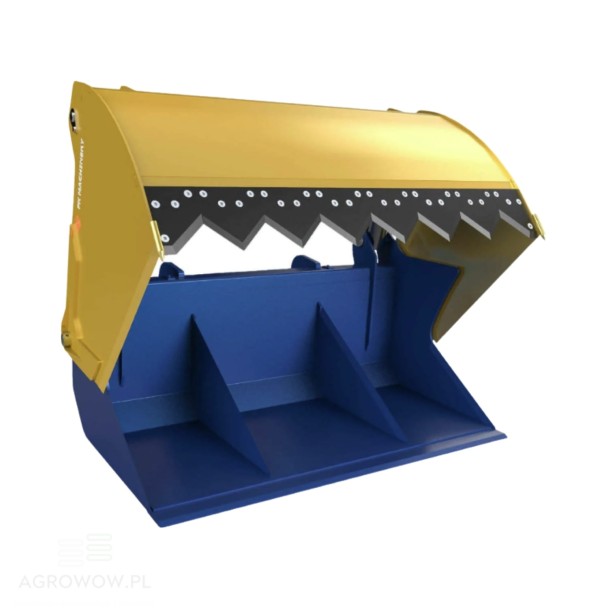
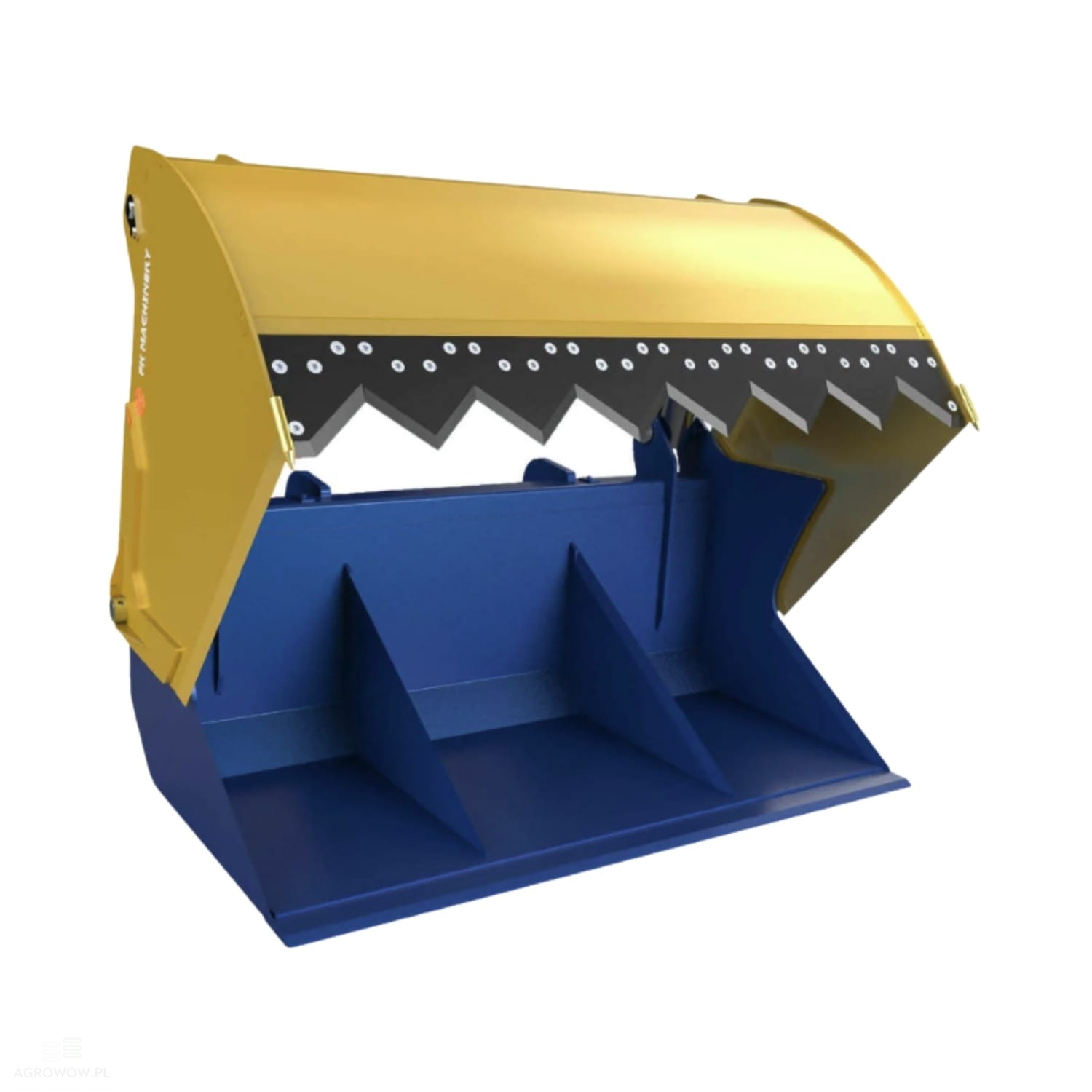
Kolaszewski silage shear bucket jaw-type with bolt-on teeth 1.2 x 0.76 m
 Description
Would you like to set the specification and tailor the silage block cutter to your individual needs?
We can prepare a mounting for any type of equipment — tractor, excavator, loader, forklift and many other machines
Get in touch with our sales engineer!
E-mail address: sklep@agrowow.pl
Telephone number: +48 880 261 210 | +48 504 947 222
We will gladly help you choose the right configuration and answer any question you may have.
- Manufacturer: Kolaszewski
- Catalogue number: KXLCB
- Manufacturer's designation: Silage shear bucket with bolt-on teeth
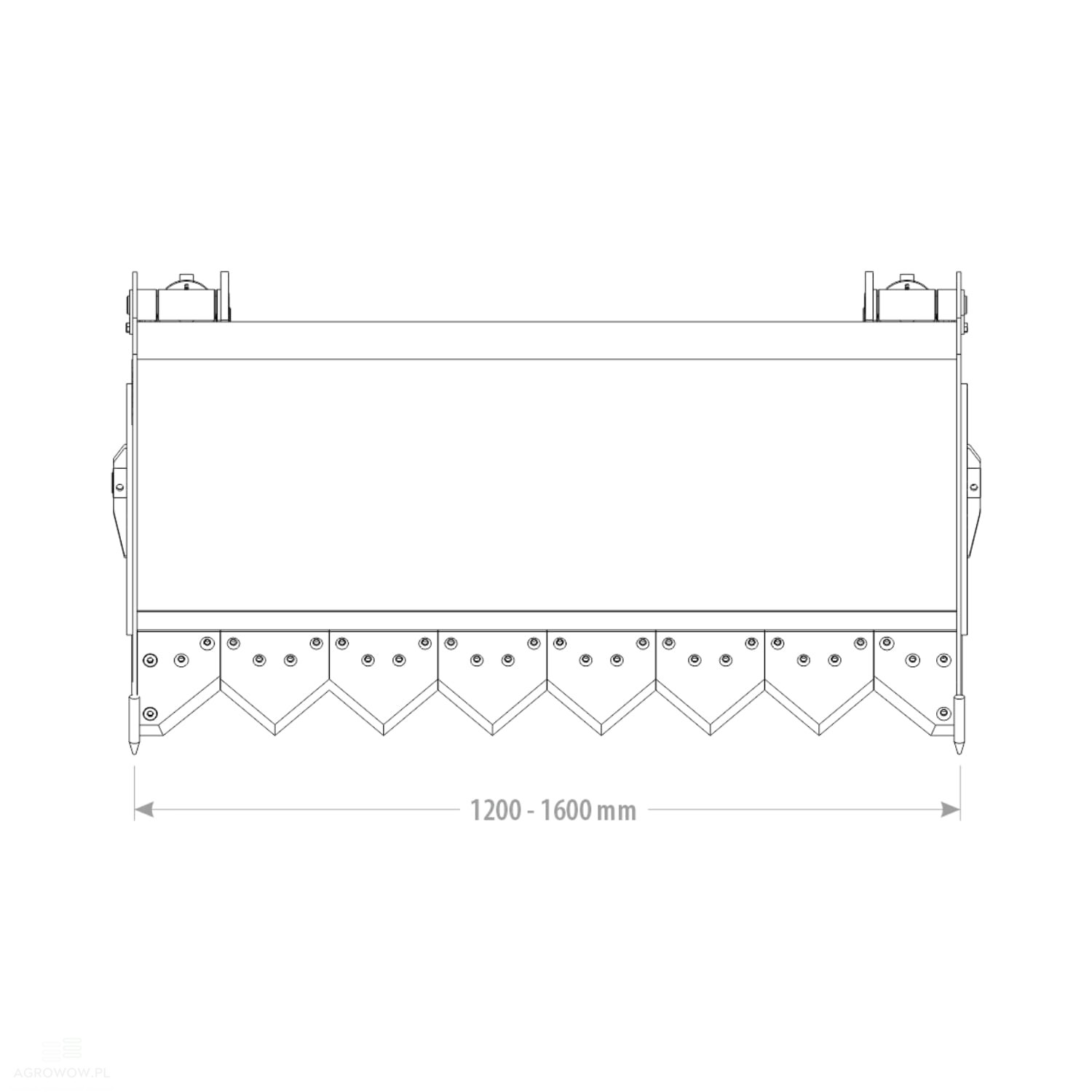
- Width: 1200 mm
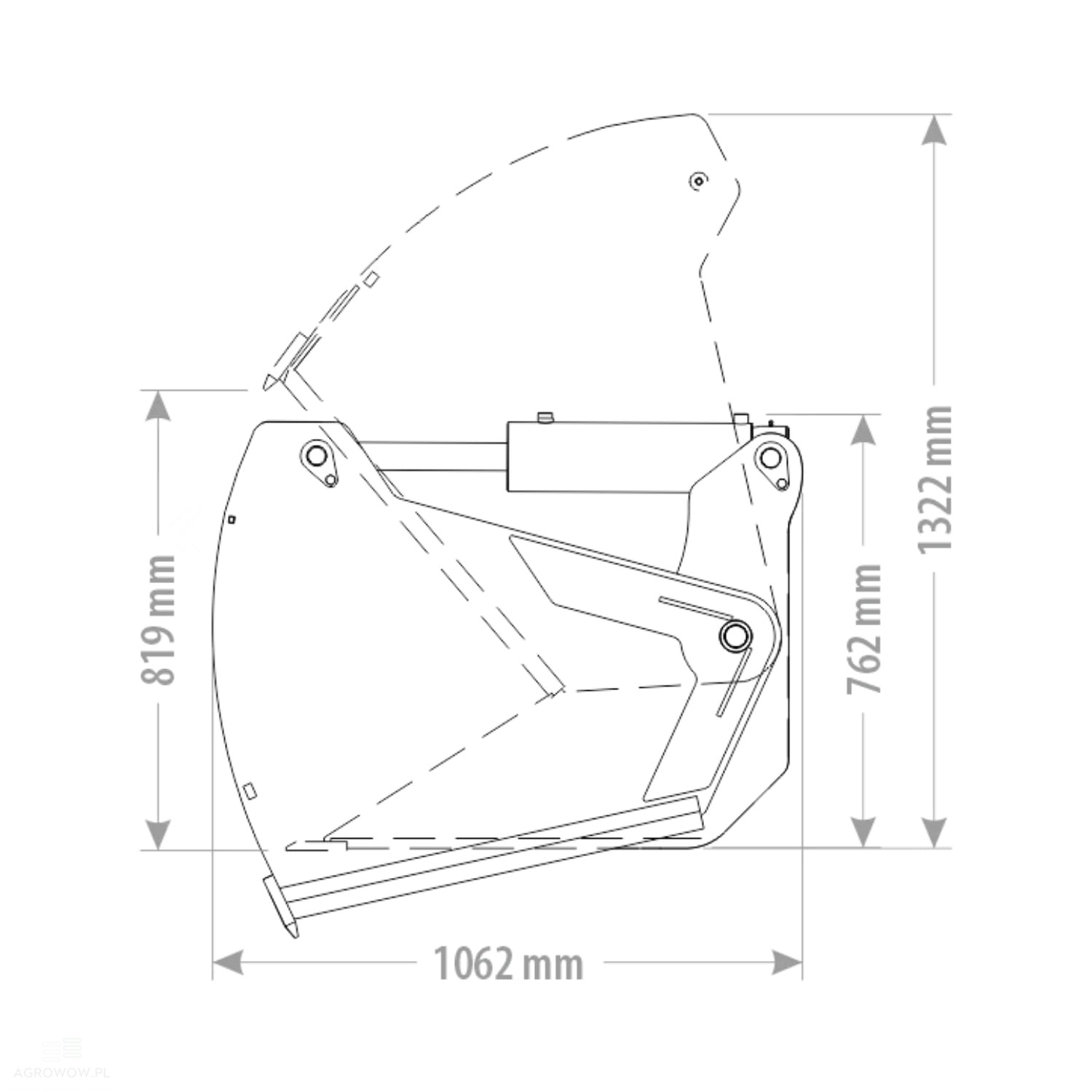
- Length: 1062 mm
- Height: 762 mm
- Height with jaw: 1322 mm
- Capacity: 0.65 m3
- Weight: 485 kg
- Side: 8 mm
- Pressure: 180 bar
- Flow: 25 L/min
- Cutting tines: alloy steel
- Blade HB500: 110x16
- Sides: with a cutting edge
Optional extras at additional cost:
- Flow divider - DFL
The DFL flow divider is a durable, precise hydraulic device intended to split working fluid evenly to two or more consumers within a single circuit. Its main function is to provide a proportional flow regardless of pressure differences or varying load on individual sections of the system. The DFL is used wherever several hydraulic cylinders must work simultaneously and in synchronisation, or where different assemblies must be supplied evenly. The device is built from materials highly resistant to wear and to high pressures, which keeps it dependable even in difficult operating conditions. Its solidity and accuracy give the DFL divider a long life and effective operation. It is a universal solution that works well in agricultural machinery as well as in industrial and construction systems, wherever precise control of hydraulic flow is essential.
Detailed description:
- The jaw-type silage shear bucket is a compact and functional agricultural implement which effectively streamlines the process of taking bulk feed from silos and clamps, eliminating the need to remove the material by hand and limiting losses.
- The unit has been created with small and medium-sized farms in mind, where precision, reliability and the quick completion of daily tasks connected with feeding animals are important.
- Thanks to the precision cutting system, the silage is cut evenly without being torn, which limits the access of air and protects the feed against spoilage and loss of quality.
- The model with a width of 1200 mm, a length of 1062 mm and a height of 762 mm (1322 mm with the jaw raised) performs excellently in restricted working space, for example in tight transhipment areas or between silos.
- A capacity of 0.65 m³ allows appropriate portions of material to be picked up efficiently in a single cycle, which considerably speeds up the whole feeding process and increases its effectiveness.
- Thanks to its weight of 485 kg, the unit ensures stability during work, while its hard-wearing construction allows safe use even under intensive operation.
- The side thickness of 8 mm and the side cutting blades used allow the silage to be cut accurately also at the edges, which reduces the amount of material left behind and makes it easier to keep the silo tidy.
- High-quality cutting tines made of high-grade steel provide durability and abrasion resistance, so the machine can work reliably for a long time without the need for frequent repairs.
- Precise collection of silage right from the floor is made possible by a solid blade made of wear-resistant HARDOX HB500 steel (110x16 mm), ideal for working with hard and compacted material.
- The hydraulic drive system works at a pressure of 180 bar and a flow rate of 25 l/min, ensuring smooth and efficient operation of the jaws regardless of the weather and working conditions.
- The block cutter has been designed for compatibility with the most popular types of front loaders and loaders, which allows it to be put to work quickly and trouble-free without any need to modify existing machines.
- This reliable device works excellently as part of a modern feeding system – it increases the pace of work, reduces feed consumption and supports the health and productivity of the herd, while at the same time raising the overall organisation of work on the farm.