


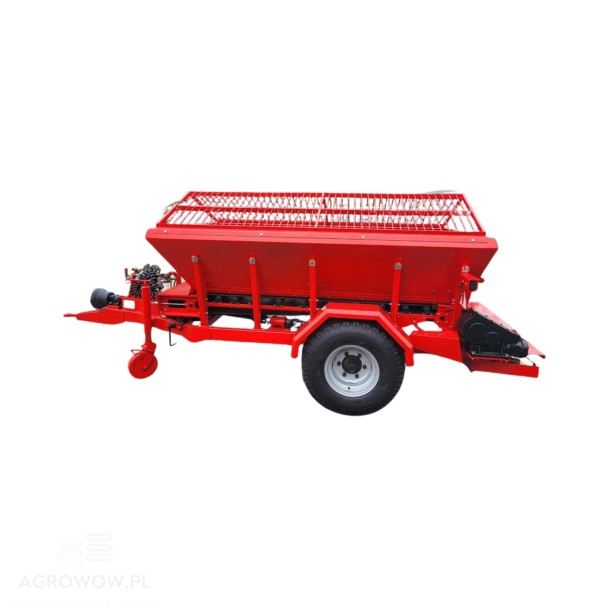
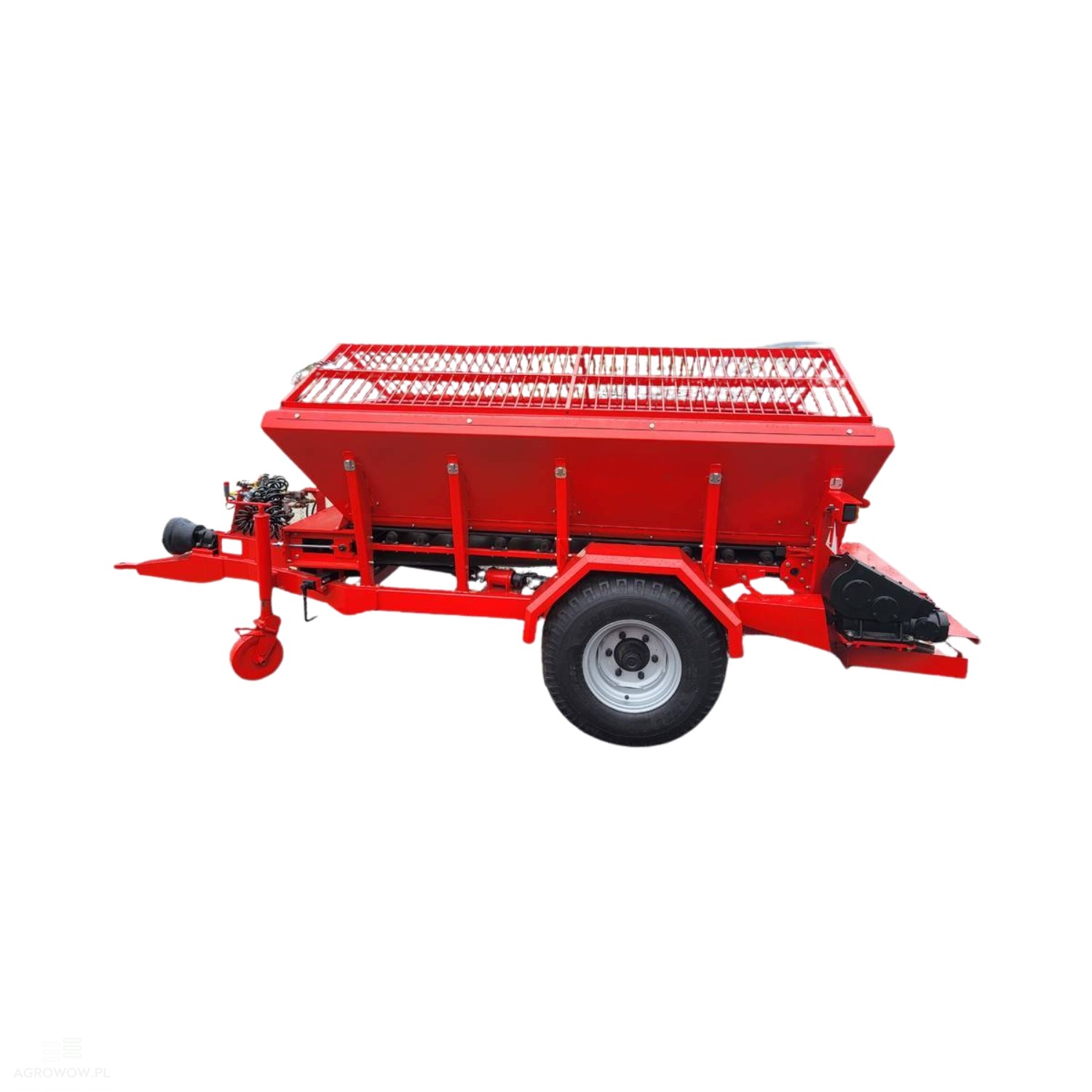
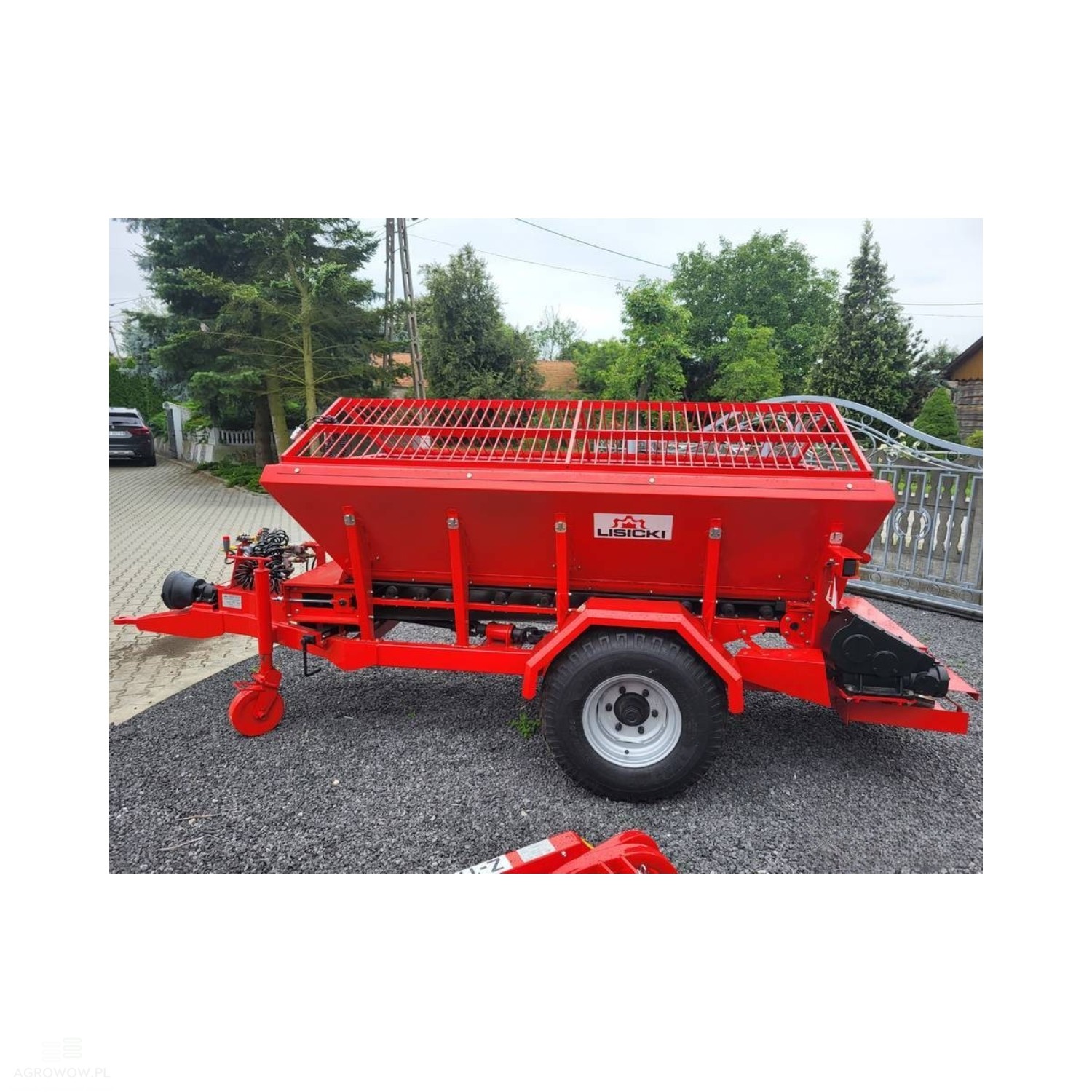
Sand and salt spreader 1800 L
 Description
- Manufacturer: Lisicki
- Catalogue number: LI3TRO
- Manufacturer's designation: Bulk fertiliser spreader
- Width: 1880 mm
- Length: 4600 mm
- Height: 1430 mm
- Capacity: 1800 L / 3000 kg
- Weight: 990 kg
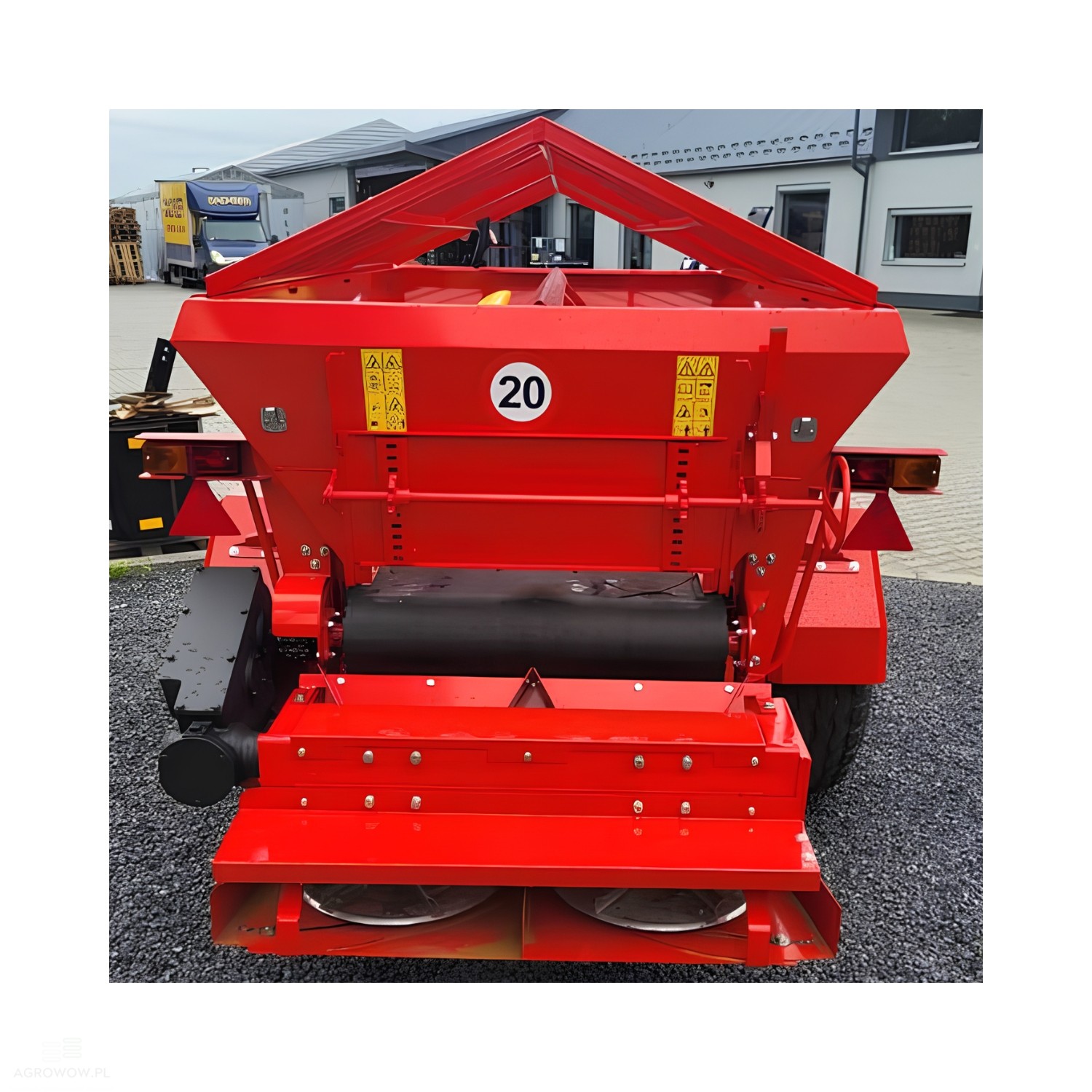
- Disc drive: mechanical from the PTO shaft
- Belt and disc speed adjustment: mechanical, from the PTO shaft
- Road lights
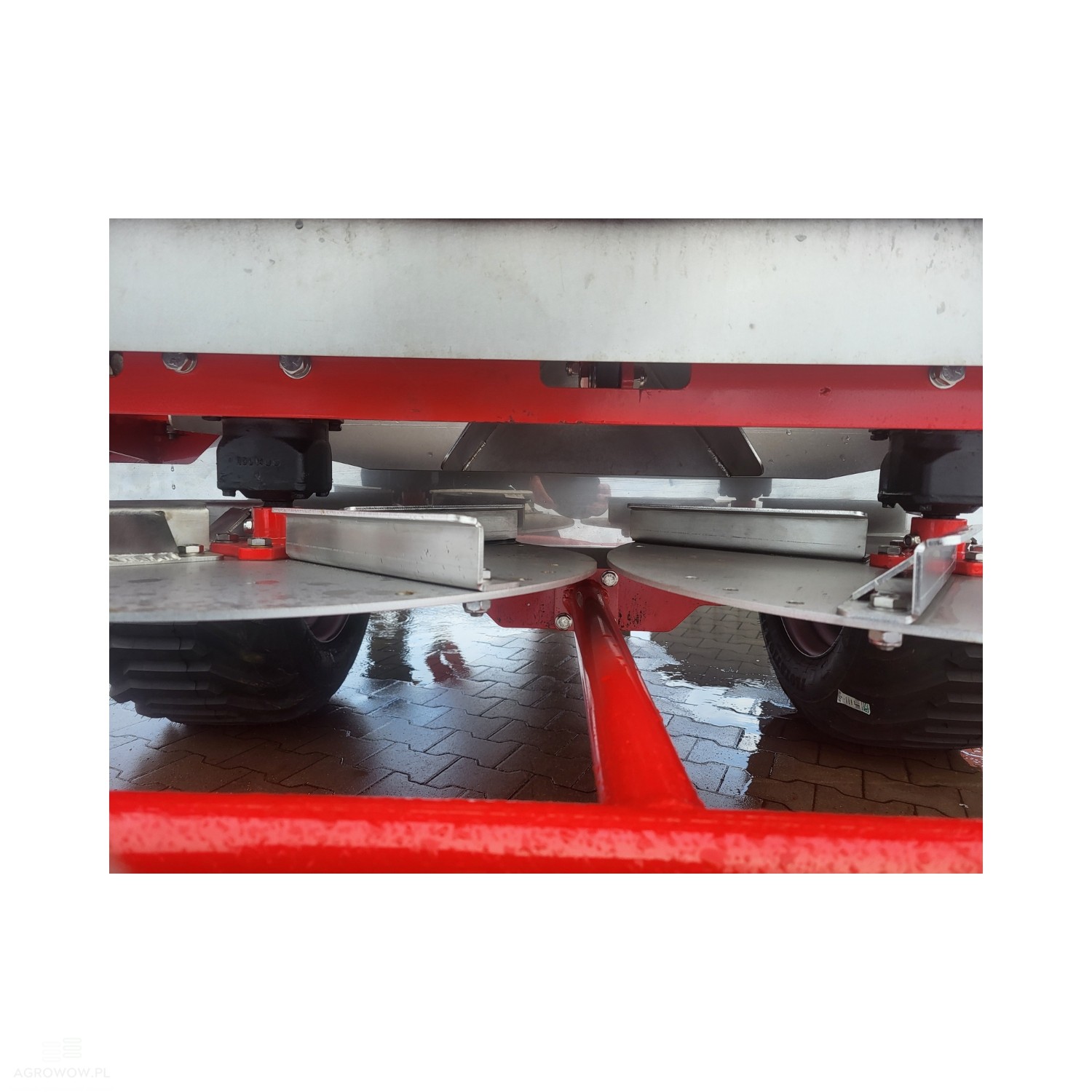
- Acid-resistant discs
Optional extras at additional cost:
- Mechanical border spreading
Mechanical border spreading is a feature on agricultural machines that allows seed to be applied precisely along field boundaries, roads and other areas where the distribution of the material must be closely controlled. The mechanism works on a mechanical arrangement that regulates the quantity and direction of application, making effective use of the seed and minimising waste. The core of mechanical border spreading is the drive mechanism, which transmits power from the tractor's power take-off (PTO) or from the machine's wheels to the distribution system. Precision comes from carefully designed spreading discs that allow the width and rate of application to be adjusted. These are usually discs with adjustable vanes or apertures, which direct the material precisely onto the intended area.
- Dual-circuit pneumatic braking system
The dual-circuit pneumatic brake system is an advanced system used on trucks, buses and agricultural and construction machinery, providing effective, safe braking even under heavy loads. Its design is based on two independent circuits, which makes it more dependable. If one circuit fails the other continues to work, allowing partial braking and significantly improving safety. The system runs on compressed air generated by a compressor driven by the vehicle's engine. The air is stored in pressure vessels and distributed through control valves and pneumatic lines. The first circuit usually brakes the wheels of one axle — the front, for example — while the second handles the rear axle. The flow of compressed air and the braking force are controlled by the main valve, which meters the pressure delivered to the pneumatic actuators precisely.
- Dual-circuit pneumatic braking system + parking brake
The dual-circuit pneumatic brake system with parking brake is an advanced solution used on trucks, buses and agricultural and construction machinery, giving high reliability and safety in all conditions. The system is built around two independent circuits, which allow effective braking even if one of them fails, while the additional parking brake holds the vehicle securely when parked. The parking brake has its own system based on spring-loaded pneumatic actuators, which remain locked when there is no air pressure. This mechanism ensures the vehicle stays immobilised even if the pneumatic system fails. The parking brake is applied manually by the operator using a dedicated control valve, allowing the vehicle to be held securely on slopes or during longer stops.
- Parking brake system
The parking brake system is a key element keeping a vehicle safe when parked, particularly where it must be held on a slope or in difficult terrain. The system works independently of the main brake system, using spring-loaded pneumatic actuators that remain locked when there is no pressure in the circuit. This makes the parking brake dependable even if the pneumatic system fails or the engine is switched off. The mechanism is applied manually by the operator using a control valve, which allows the lock to be engaged and released precisely. When applied, the actuator spring presses the brake linings against the discs or drums, effectively locking the wheels. This design removes the need to keep the system supplied with air while parked, which further improves energy efficiency and reliability. The parking brake system not only makes the vehicle safer to operate but also protects it from uncontrolled movement in an emergency.
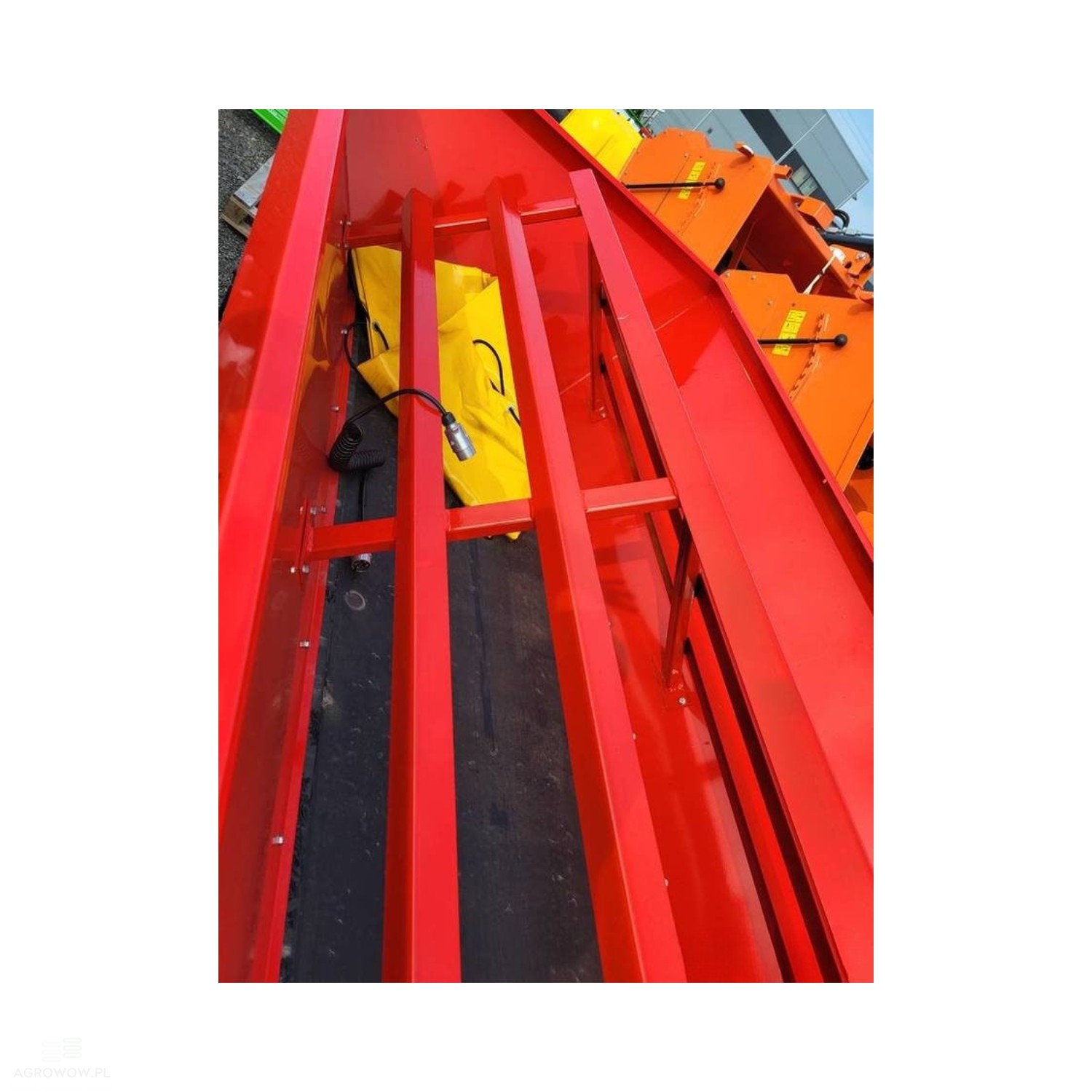
- Tarpaulin
A tarpaulin is a versatile, durable material used to protect all kinds of loads, vehicles, machines and structures from bad weather. Usually made of tough plastic such as polyethylene or PVC, a tarpaulin resists moisture, UV radiation, frost and mechanical damage. Its construction makes it dependable protection against rain, snow, wind and dirt. A further advantage of tarpaulins is that they are light and easy to handle, so they can be spread out and rolled up quickly as required. Reinforced versions offer even greater resistance to tearing and abrasion, which makes them ideal for intensive use in tough conditions. A tarpaulin is a practical item with a wide range of uses which, thanks to its durability and usefulness, is found in households as well as in industry, transport and construction.
- Grate
The grille on a sand spreader is an important structural component that plays a key role in preparing the material for spreading. Fitted at the hopper inlet, the grille acts as a protective barrier, stopping large lumps of material, stones and other debris from reaching the spreading mechanism. This keeps the machine running smoothly and without trouble, minimising the risk of blockages and of damage to the feeder or spreading disc. The grille is usually made of high-quality steel, which makes it durable and resistant to corrosion and mechanical damage, even when working in difficult conditions. The grille apertures are designed to let fine material pass freely while effectively holding back larger fractions. Some spreader models use removable grilles, which makes cleaning and maintenance easier and adds to ease of use.
Detailed description:
- The sand and salt spreader is an efficient and solid device designed for professional spreading of loose materials, such as sand and salt.
- As a sand and salt spreader, it meets the highest requirements for precise and effective spreading in difficult winter conditions.
- The spreader is built from durable materials, such as the impact-resistant plastic used for the hopper and the acid-resistant discs, which guarantee a long service life and reliability even in an aggressive working environment.
- The mechanical drive of the discs and the belt from the PTO shaft allows precise control of the spreading speed, which makes it possible to adapt the operation of the machine to various needs and ground conditions.
- Equipment with full road lighting increases safety when travelling on public roads, while the lightweight design allows the unit to work with a wide range of tractors.
- Thanks to its solid technical solutions and precision of action, the sand and salt spreader is a dependable implement for winter maintenance of surfaces.
- The unit is driven by a power take-off (PTO) at 540 rpm and a maintenance-free gearbox, which guarantees smooth, dependable operation. The power requirement is 30 HP, which means the sand and salt spreader works with a wide range of agricultural tractors.
- Additional features, such as adjustment of the discharge width, a tarpaulin protecting the material against moisture and full road lighting, increase comfort of use and safety of work, including in conditions of limited visibility.
- Its strength, versatility and effectiveness make it an ideal choice for users looking for a professional and durable solution for handling loose materials.