


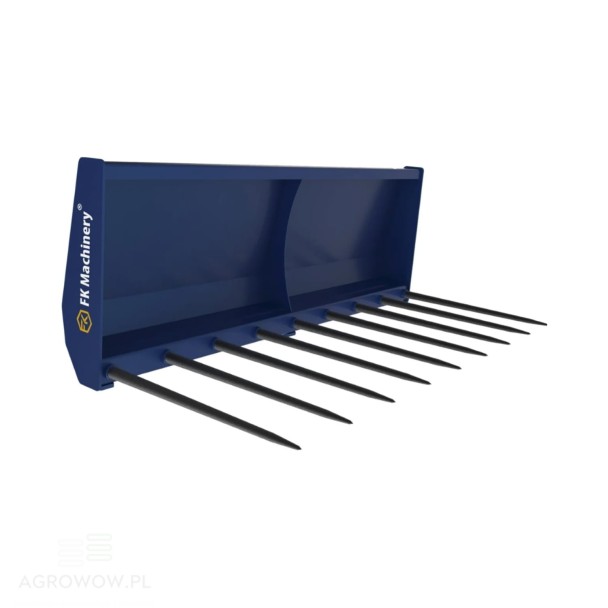
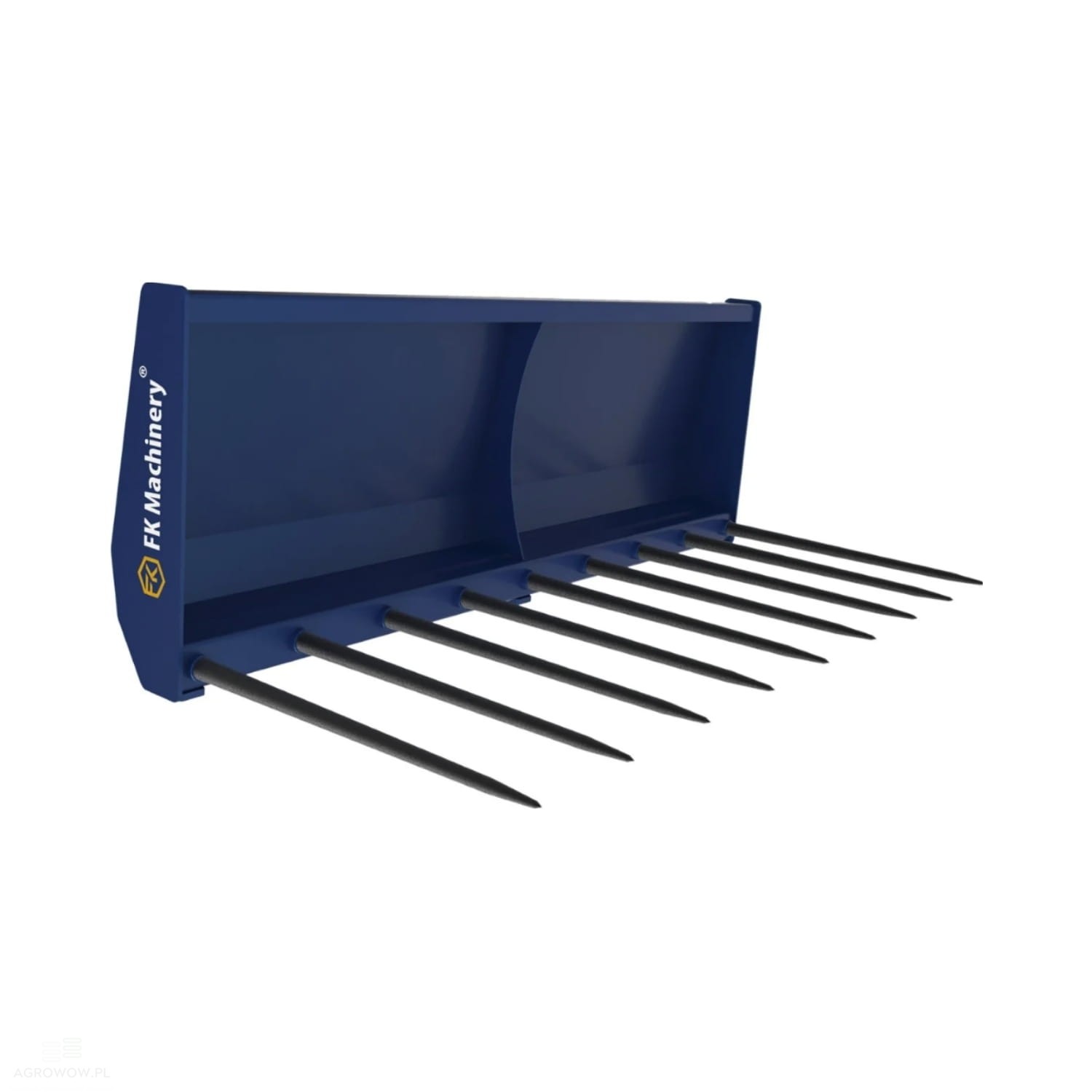
Kołaszewski manure fork STANDARD 1.8 x 0.64 m
 Description
Want to determine the specifications and customize a meadow harrow to your individual needs?
We can prepare a mounting system for any type of equipment — tractors, excavators, loaders, forklifts, and many other machines.
Contact our sales engineer!
Email address: sklep@agrowow.pl
We will gladly help you choose the right configuration and answer any questions you may have.
- Manufacturer: Kołaszewski
- Catalogue number: KMMF18
- Manufacturer's name: STANDARD manure fork
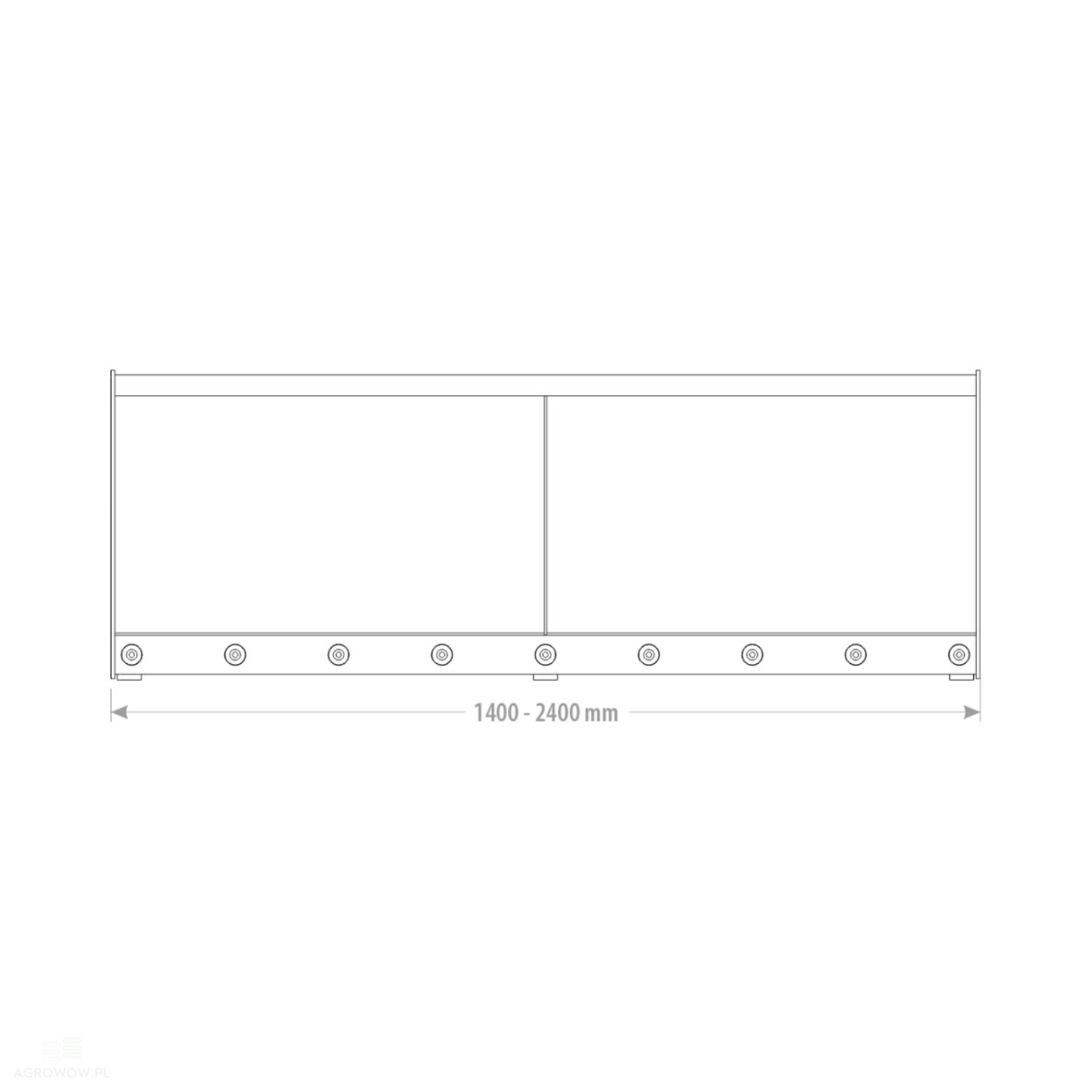
- Width: 1800 mm
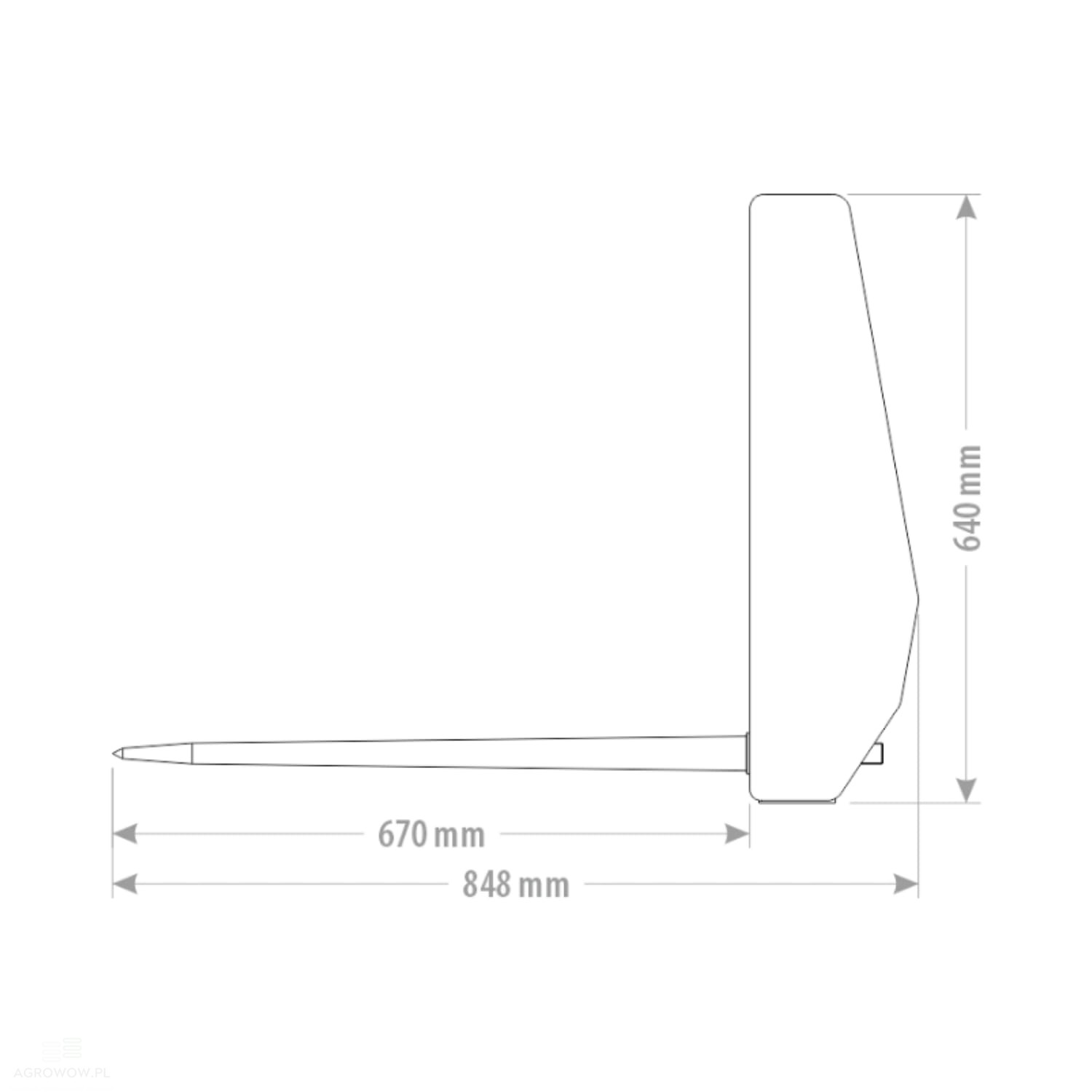
- Length: 848 mm
- Tine length: 670 mm
- Height: 640 mm
- Capacity: 0.79 m³
- Weight: 110 kg
- Number of tines: 9
- Side plate thickness: 5 mm
- Heavy-walled profile construction
- Tine mountings reinforced with conical sleeves
- Tines: forged L-810 M22
Detailed Description:
-
The STANDARD manure fork with a width of 1800 mm is a durable and functional agricultural tool created for daily, intensive work on farms focused on efficient organic material management. Its primary function is the fast and smooth handling and loading of manure, but the fork's design also allows for convenient use when handling silage, straw, compost, and other loose or bulk materials.
-
A substantial working width of 1800 mm and a capacity of 0.79 m³ allow for an increased single-load volume, which translates to faster task completion and a reduced number of work cycles. The structural length is 848 mm and the height is 640 mm—parameters that ensure an optimal balance between capacity and maneuverability, enabling work in harder-to-reach places such as the interiors of farm buildings or narrow transfer spaces.
-
The fork's frame is built from heavy-walled steel profiles, which guarantee resistance to dynamic loads, mechanical damage, and corrosion. Thanks to this construction, the tool performs perfectly even when working with heavy, wet, or compacted material, without the risk of bending or cracking.
-
The model is equipped with nine forged L-810 M22 tines, each 810 mm long. These tines are characterized by high resistance to bending and abrasive wear, and their properly engineered distribution allows for an even distribution of pressure force. As a result, material is loaded quickly and efficiently, regardless of its structure and level of compaction.
-
The stability and safety of the construction have been further reinforced by utilizing conical sleeves for mounting the tines. This type of solution increases the durability of the connections, prevents loosening during long-term operation, and limits the need for frequent servicing related to the attachment's hardware.
-
Despite its solid workmanship and large dimensions, the total weight of the fork is only 110 kg. The low weight allows for reduced fuel consumption and limits the load on the drivetrain and hydraulic systems of the machine, while simultaneously making it easier to maneuver the entire setup—which is crucial when working on small surfaces or in enclosed rooms.
-
The STANDARD forks are compatible with popular models of front loaders and telehandlers equipped with a EURO-type mounting system. Thanks to this universal mounting system, integrating the tool with the machine is quick and trouble-free, translating into comfort and flexibility of use in various working conditions.
-
The versatility and durability of this design make the fork ideal for carrying out many tasks on the farm, both seasonal and daily. They significantly contribute to streamlining work, increasing the pace of task execution, and improving the organization of loading and transport processes.
-
With regular maintenance and proper use, the STANDARD 1800 mm manure fork maintains high operational efficiency for many years. It is an investment that pays off quickly—both in terms of time and resources—offering reliability, functionality, and durability in every working situation.
-
They provide irreplaceable support in the daily operations of a modern agricultural farm, combining simplicity of operation with high performance efficiency and resistance to harsh operating conditions.