


Categories
Vendor
Availability
Price
-
from
to
Agricultural machinery is the essential equipment for every modern farm, supporting all stages of agricultural production—from cultivation and sowing to fertilization, plant protection, harvesting, and transport. Our product range includes seed drills, sprayers, disc harrows, ploughs, fertilizer spreaders, tillers, flail mowers, and a wide array of attachments for front loaders. Choose efficiency, precision, and reliability for your daily field work.
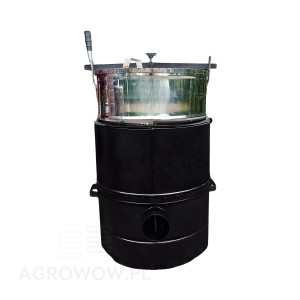 Agrowow 100 L coal-fired potato steamer, painted with stainless steel boiler
885,00 zł
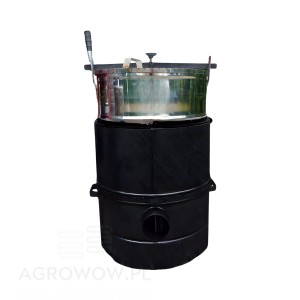 Agrowow 160 L coal-fired potato steamer, painted with stainless steel boiler
1 255,00 zł
Row Crop Cultivator and Ridger – A Versatile Tool for Root Crop Cultivation
The row crop cultivator-ridger is an essential piece of equipment in the arsenal of every farmer specializing in root crops, such as potatoes or sugar beets. Its primary function is the simultaneous loosening of the soil and earthing up (ridging) of the plants, which promotes proper growth and increases yields. Using a cultivator-ridger enables effective weed control and improves soil structure, creating better conditions for the plants' root systems. Modern models are equipped with adjustable working components, allowing the machine to be adapted to different row spacings and tillage depths. When selecting the right cultivator-ridger, it is worth paying attention to build quality, the materials used in production, and the availability of spare parts, all of which ensure long-term and trouble-free operation of the device.
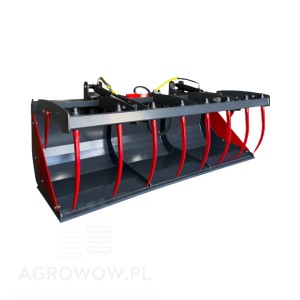
Bale Grab – Indispensable for Transporting and Storing Fodder
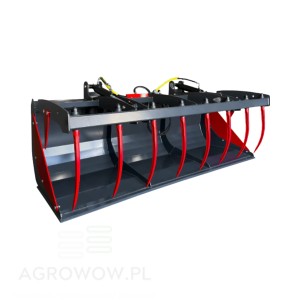
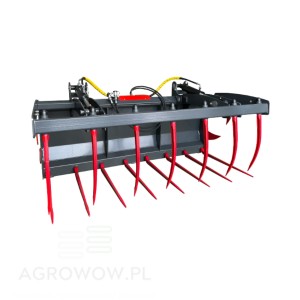
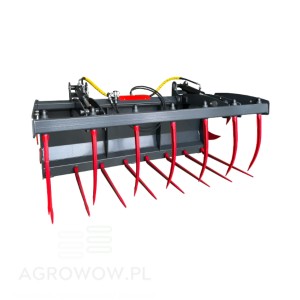
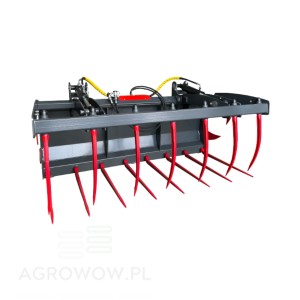
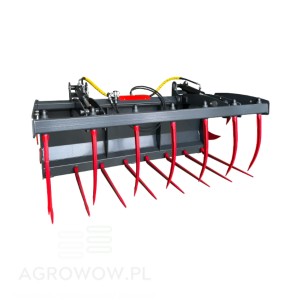
A bale grab is a specialized tool designed for the safe and efficient transport and storage of hay, straw, and silage bales. Its design ensures a secure grip on the bales without damaging them, which is particularly important for high-quality livestock feed. Bale grabs are compatible with various types of front and telescopic loaders, making them a universal solution for many agricultural operations. When choosing the right model, it is essential to consider the maximum load capacity, the range of arm adjustment, and the quality of the hydraulic cylinders, which are responsible for the smooth operation of the device. Investing in a robust bale grab translates into increased work efficiency and improved safety during loading and unloading operations.
Potato Digger – An Efficient Solution for Small and Medium-Sized Farms
A potato digger is an agricultural machine that significantly facilitates the potato harvest, especially in small and medium-sized farms. Its primary task is to dig tubers out of the soil and separate them from earth and plant residue. Depending on the model, diggers can be single-row or double-row, which allows them to be adapted to the size of the crop and the available tractor. When choosing a potato digger, it is worth paying attention to the working width, digging depth, and the vibration system, which affects the efficiency of separating tubers from the soil. Modern diggers are equipped with vibration-damping systems, which increase operator comfort and minimize damage to the potatoes during harvesting. By using a potato digger, it is possible to significantly speed up the harvesting process and reduce labor costs.
Bucket – A Universal Tool for Loading and Transporting Bulk Materials
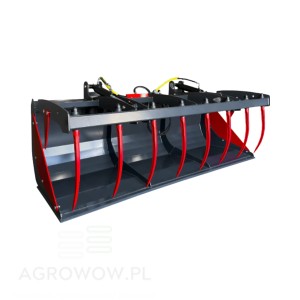
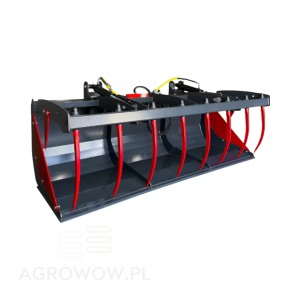
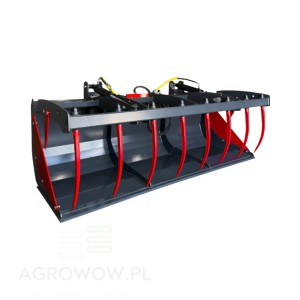
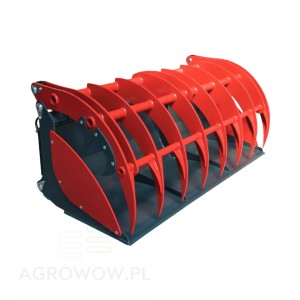
A bucket, also known as a loader bucket, is a versatile tool used in agriculture for loading, transporting, and unloading various types of bulk materials, such as grain, fertilizers, feed, or manure. Thanks to a wide variety of available models, buckets can be adapted to different types of front loaders, telehandlers, or skid-steer loaders. Key parameters when choosing the right bucket include its capacity, working width, and the material used in its construction. High-quality buckets are characterized by a robust design, resistance to abrasion, and ease of mounting and dismounting. Investing in the right bucket translates into increased efficiency on the farm and a reduction in the time required for material handling.
Sprayer – A Key Tool in Crop Protection
A sprayer is an indispensable machine on every farm, responsible for the application of plant protection products, foliar fertilizers, and growth regulators. Through the precise dosing of chemical substances, sprayers provide effective protection for crops against diseases, pests, and weeds, which translates into increased yields and improved harvest quality. Depending on their needs, farmers can choose from mounted, trailed, or self-propelled sprayers, which differ in tank capacity, boom width, and control systems. Modern sprayers are equipped with GPS technology, automatic section control, and sensors that enable precise and economical agrotechnical treatments. When choosing a sprayer, it is worth paying attention to its efficiency, build quality, as well as the availability of service and spare parts.
Fertilizer Spreaders – Precision Tools for Fertilizer and Seed Application
Spreaders are agricultural machines designed for the uniform distribution of mineral fertilizers, lime, grass seeds, and other sowing materials across the field. Their use allows for the optimal utilization of production inputs, which translates into increased crop efficiency and reduced operational costs. Depending on the material type and field size, farmers can choose between single- or twin-disc spreaders, and mounted or trailed models. Key parameters when selecting the right spreader include hopper capacity, working width, dosing system, and the ability to adjust the application rate. Modern spreaders are equipped with electronic control systems that enable precise dosing and monitoring of the spreading process. Investing in a high-quality spreader leads to better fertilizer utilization and improved soil structure.
Potato Planter – An Efficient Device for Precision Tuber Planting
A potato planter is a specialized agricultural machine designed for the mechanical planting of potato tubers into prepared soil. Its use allows for the precise placement of seed potatoes at the appropriate depth and in uniform intervals, which promotes even plant growth and facilitates subsequent agrotechnical operations. Depending on requirements, farmers can choose from single-, double-, or multi-row planters, which vary in productivity and tractor power requirements. Modern planters are equipped with systems for adjusting planting depth and tuber spacing, as well as mechanisms to prevent damage to the seed potatoes. When selecting the right potato planter, it is worth paying attention to its construction, build quality, and the availability of spare parts, which will ensure long-term and trouble-free use of the machine.
Front Loader Attachments – Enhancing the Functionality of Agricultural Machinery
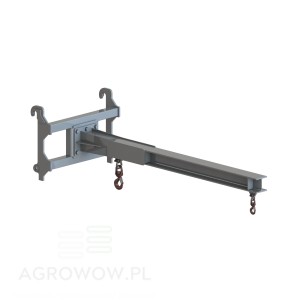
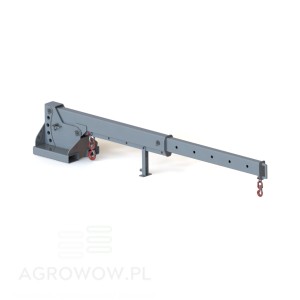
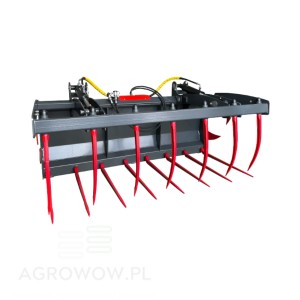
Front loader attachments significantly enhance the functionality of agricultural machinery, enabling loading, transport, and maintenance tasks around the farm. The most popular tools include bale grabs, buckets, pallet forks, bale clamps ('crocodiles'), and bulk material buckets. Thanks to quick-attach systems, the equipment can be easily swapped, adapting the machine to current requirements. Their robust construction and compatibility with various types of loaders make this an investment in efficiency, convenience, and the multi-tasking capabilities of daily farm operations.
Steamer – An Indispensable Device for Steaming Fodder and Soil
A steamer is a specialized agricultural device used primarily in livestock farming and vegetable production. Its main task is the thermal processing of fodder, such as potatoes, beets, or grains, through steaming. This process increases the digestibility of the feed and eliminates potential pathogens, which directly translates into improved animal health and better utilization of nutritional values. In horticulture, steamers are also used for soil disinfection, which helps reduce the development of diseases and pests, thereby increasing crop yields. Modern steamers are characterized by high efficiency, energy savings, and the ability to automatically control the steaming process. Their construction is made of durable materials resistant to high temperatures and moisture, ensuring a long service life for the device. When choosing a steamer, it is worth considering its capacity, heating speed, as well as ease of operation and cleaning.
Pallet Jack – A Practical Solution for Internal Transport on the Farm
A pallet jack, also known as a pallet truck, is a fundamental transport tool used in every modern agricultural operation. It enables the quick and convenient movement of pallets containing fertilizers, feed, tools, or other materials across the farm, warehouse, or production facility. Pallet jacks are available in manual and electric versions, which differ in load capacity, fork length, and operating ergonomics. Due to their simple design, pallet jacks are easy to maintain, and their operation does not require specialized training. When choosing the right model, it is worth paying attention to the quality of the wheels (solid, pneumatic, or polyurethane), the fork length adapted to standard pallets, and the lifting system. Electric pallet jacks further increase work efficiency and safety, especially when transporting heavy loads over longer distances. Their use not only improves farm logistics but also minimizes the risk of worker injury and strain.
Cultivation Roller – Effective Soil Compaction and Leveling
A cultivation roller is one of the essential tillage implements used for preparing the soil both before and after sowing. Its primary function is to compact and level the soil surface, which improves seed-to-soil contact and promotes uniform crop emergence. Furthermore, rolling after sowing protects seeds from drying out and provides a stable seedbed, which is crucial in the event of windy weather or heavy rainfall. Depending on specific needs, various types of rollers are available—such as coil (strunowe), tube (rurowe), or ring rollers (pierścieniowe)—which can be adapted to specific soil types and agrotechnical stages. Cultivation rollers are available as mounted or trailed machines, with working widths reaching up to several meters, enabling fast and efficient processing of large areas. When choosing a roller, it is worth paying attention to its weight, the type of rings, and the ability to adjust the downward pressure on the ground.
Disc Harrow – A Reliable Tool for Stubble Cultivation
A disc harrow, also known as a disc cultivator, is an indispensable machine in any farm practicing intensive soil cultivation. Its primary purpose is the fast and effective mixing of crop residues with the soil, breaking up clods, and preparing the seedbed. Disc harrows are available in light, medium, and heavy versions, which allows for matching the machine to the soil type and the intensity of field operations. Key components include the working discs, whose angle of attack and diameter influence the working depth and the quality of soil mixing. Modern disc harrows are equipped with cushioned suspension, hydraulic folding systems, and depth adjustment mechanisms, which increase operator comfort and safety. This machine performs excellently both in stubble cultivation and in preparing fields for spring crops. Due to its efficiency and versatility, the disc harrow is an essential element of the machinery fleet on every modern farm.
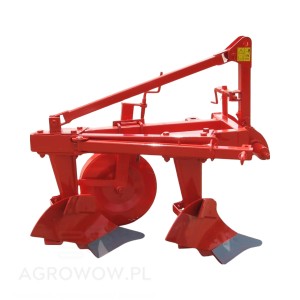
Plough – An Essential Implement for Deep Tillage
A plough is one of the oldest and most important machines in agriculture, playing a pivotal role in preparing the soil for sowing. Its primary task is to invert the top layer of soil, which enables effective burial of crop residues and organic fertilizers, while improving overall soil structure. Ploughing ensures adequate aeration, facilitates water retention, and activates biological processes that increase soil fertility. Modern ploughs are available in various configurations—such as reversible, conventional (zagonowe), and semi-mounted models—allowing for precise matching to soil type, crop requirements, and tractor power. An important aspect when choosing a plough is the number of bodies, the working width, and the safety system (e.g., hydraulic non-stop protection in case of hitting an obstacle). With a properly selected plough, it is possible to perform deep tillage efficiently and sustainably, which positively impacts subsequent stages of plant vegetation.
Seed Drill – A Precision Tool for Seed Sowing
A seed drill is an advanced agricultural machine designed for the precision sowing of various crops, such as cereals, legumes, and oilseeds. Its primary role is to ensure uniform seed placement at a specific depth and at optimal intervals, which promotes consistent germination and improved crop development. Seed drills are categorized into mechanical, pneumatic, and precision (single-seed) planters—each type serves specific applications depending on seed size and cultivation technology. Modern seed drill models feature GPS systems, seed flow sensors, and on-board computers that allow for real-time control of the seeding rate from the tractor cabin. Furthermore, precision seed drills significantly reduce seed waste and contribute to more efficient land utilization. When investing in a seed drill, it is worth considering its working width, hopper capacity, and the ease of calibration and maintenance, as these factors directly impact the machine's efficiency and longevity.
Rotary Tillers – Machines for Intensive Soil Cultivation
Rotary tillers are extremely useful machines in agriculture, gardening, and horticulture, utilized for the intensive loosening and mixing of the topsoil layer. Their operation involves breaking up and turning the soil using rotating blades or tines, which promotes better aeration, even distribution of crop residues, and improved conditions for the root system. Rotary tillers are also used for preparing seedbeds for vegetable crops, lawns, or tree planting. Depending on individual requirements, models are available as petrol-powered, electric, or tractor-mounted units, with adjustable working depth and width. Modern rotary tillers are characterized by a robust construction, ease of use, and high performance, even in challenging soil conditions. By investing in this type of equipment, farmers gain the ability to prepare the soil quickly and efficiently without the need for multiple different machines. Rotary tillers are also effective for land reclamation and establishing crops in new locations.
Flail Mower – An Effective Tool for Mulching and Mowing
A flail mower is a specialized agricultural machine designed for intensive mowing of grass, weeds, and brush, as well as for shredding crop residues. By utilizing flails instead of traditional blades, this mower effectively handles dense vegetation and difficult terrain, ensuring uniform mulching and biomass shredding. It is an extremely useful tool for farms engaged in organic farming, pasture management, and maintenance of wasteland. Flail mowers are available in rear-mounted, side-mounted, and hydraulically offset versions, which enhances their versatility. When choosing a flail mower, it is worth paying attention to the working width, the type of flails (hammer or knife flails), the overall performance, and the ability to adjust the cutting height. Thanks to its design and power, the flail mower is ideally suited for both large agricultural holdings and municipal companies involved in the maintenance of green areas.
Weed Harrow – Mechanical Weed Control in Row Crops
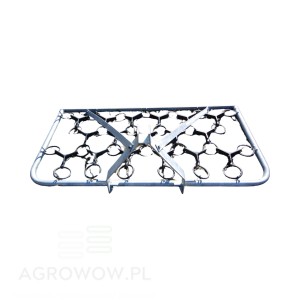
A weed harrow is an agricultural machine used for the mechanical removal of weeds between crop rows without the need for chemical plant protection products. Its operation involves gently loosening the soil and removing young weeds before they can take root and compete with crops for water and nutrients. This machine is particularly useful in organic farming and in situations where the use of herbicides is limited or undesirable. Depending on the design, weed harrows may be equipped with spring tines, finger weeders, or brush systems that precisely work the soil without damaging the crops. Modern models allow adjustment of row spacing, working depth, and the angle of the working tools. By using a weed harrow, it is possible to significantly reduce weed infestation, improve soil structure, and increase crop yields without the use of chemical treatments.
Rakes and Tedders – Essential Equipment for Hay and Silage Harvesting
Rakes and tedders are agricultural machines that play a key role in the harvesting of forage crops, hay production, and silage preparation. Tedders are used to spread freshly cut grass to accelerate the drying process, while rakes gather the crop into windrows—uniform rows ready to be collected by a baler or forage harvester. The efficient use of these machines has a direct impact on forage quality by minimizing nutrient losses and preventing mold formation. Depending on their needs, farmers can choose from rotary, wheel, or belt-driven models, which differ in performance, working width, and drive systems. Modern machines are often equipped with anti-vibration systems, hydraulic suspension, and folding mechanisms for easier transport. When selecting a rake or tedder, it is important to consider the type of grassland, the intensity of use, and the quality of the components. Proper use of these machines helps optimize forage preparation and significantly reduces harvesting time.