


Categories
Vendor
Availability
Price
-
from
to
A sand and salt spreader increases safety on slippery surfaces by improving vehicle traction. A tractor-mounted spreader and a quad spreader are mobile solutions for different types of terrain. A self-loading spreader makes work easier thanks to automatic filling, saving time and effort. A solid construction and precise spreading adjustment ensure efficiency in difficult winter conditions.
Gravity-fed roller sand spreader PZ 2.0 m

- Manufacturer: Woprol
- Catalog number: WL22PW
- Manufacturer's designation: Gravity-fed spreader PZ 2.0
- Spreading width: 2000–6000 mm
- Weight (empty): 570 kg
- Hopper capacity: 1.6 m³
- Transport width: 2200 mm
- Hopper height: 1300 mm
- Hopper depth: 1300 mm
- Hydraulic motor
- Number of crushing rollers: 2
Availability: Dostępny
Self-loading grit spreader Sand Master 1.6 m
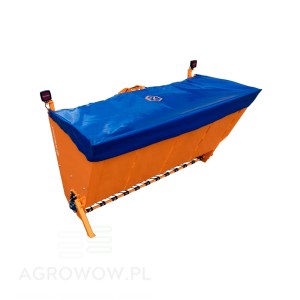
- Manufacturer: FK Machinery
- Catalogue number: KSSM160
- Manufacturer's name: Sand Master grit spreader
- Working width: 1600 mm
- Capacity: 1.20 m³
- Weight: 568 kg
- Pressure: 120 bar
- Flow rate: 35 L/min
Availability: Dostępny
Self-loading grit spreader Sand Master 1.8 m
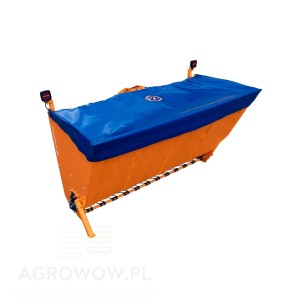
- Manufacturer: FK Machinery
- Catalogue number: KSSM180
- Manufacturer's name: Sand Master grit spreader
- Working width: 1800 mm
- Capacity: 1.35 m³
- Weight: 610 kg
- Pressure: 120 bar
- Flow rate: 35 L/min
Availability: Dostępny
Self-loading grit spreader Sand Master 2.0 m
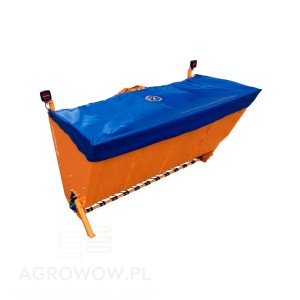
- Manufacturer: FK Machinery
- Catalogue number: KSSM200
- Manufacturer's name: Sand Master grit spreader
- Working width: 2000 mm
- Capacity: 1.50 m³
- Weight: 658 kg
- Pressure: 120 bar
- Flow rate: 35 L/min
Availability: Dostępny
Self-loading grit spreader Sand Master 2.2 m
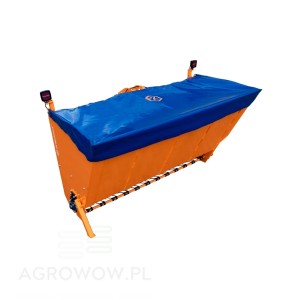
- Manufacturer: FK Machinery
- Catalogue number: KSSM220
- Manufacturer's name: Sand Master grit spreader
- Working width: 2200 mm
- Capacity: 1.65 m³
- Weight: 718 kg
- Pressure: 120 bar
- Flow rate: 35 L/min
Availability: Dostępny
Self-loading grit spreader Sand Master 2.4 m
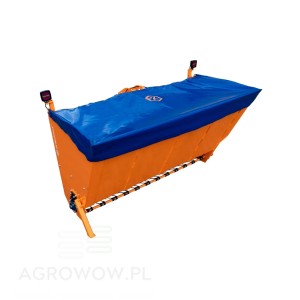
- Manufacturer: FK Machinery
- Catalogue number: KSSM240
- Manufacturer's name: Sand Master grit spreader
- SWorking width: 2400 mm
- Capacity: 1.8 m³
- Weight: 758 kg
- Pressure: 120 bar
- Flow rate: 35 L/min
Availability: Dostępny
Self-loading grit spreader Sand Padawan 1.4 m
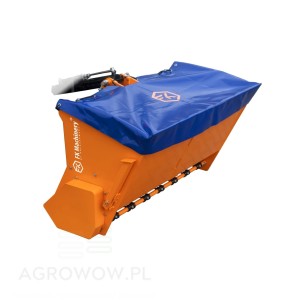
- Manufacturer: FK Machinery
- Catalogue number: KSSP140
- Manufacturer's name: Sand Padawan grit spreader
- Working width: 1430 mm
- Capacity: 0.27 m³
- Weight: 230 kg
- Pressure: 120 bar
- Flow rate: 35 L/min
Availability: Dostępny
Self-loading roller sand spreader PO 2.0 m
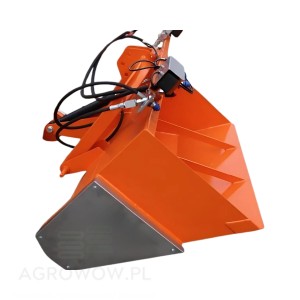
- Manufacturer: Woprol
- Catalog number: WL20PW
- Manufacturer's designation: Drop spreader PO 2.0
- Spreading width: 2000 mm
- Weight (empty): 540 kg
- Hopper capacity: 1.1 m³
- Transport width: 2000 mm
- Hydraulic motor
- Number of crushing rollers: 2
Availability: Dostępny
Self-loading roller sand spreader PS 2.0 m
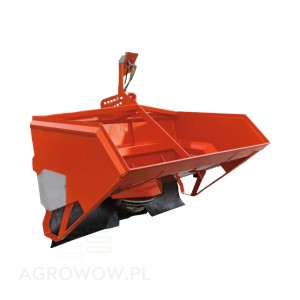
- Manufacturer: Woprol
- Catalog number: WL23PW
- Manufacturer's designation: Self-loading spreader PS 2.0
- Spreading width: 2000–6000 mm
- Weight (empty): 440 kg
- Hopper capacity: 0.8 m³
- Transport width: 2300 mm
- Hopper height: 700 mm
- Number of crushing rollers: 2
Availability: Dostępny
Self-loading sand and salt spreader PSO 1,2 m

- Manufacturer: Woprol
- Catalogue number: WL12PSO
- Manufacturer's name: Self-loading sand and salt spreader PSO 1,2 m
- Spreading width: 1200 mm
- Weight (without material): 200 kg
- Hopper capacity: 0.26 m³
- Transport width: 1400 mm
- Hopper height: 500 mm
Availability: Dostępny
Sand and salt spreader – an effective solution for safe surfaces
Sand and salt spreader is a device that plays a key role in maintaining safety on roads, sidewalks, parking lots, and other surfaces during the winter season. Its main function is the even distribution of anti-slip materials such as sand or salt, which increases surface traction and minimizes the risk of accidents caused by slipping. Spreaders are essential for municipal services, infrastructure management companies, as well as private property owners and businesses responsible for safety on their premises. They are available in many variants – from small handheld models, through units mounted on quads or garden tractors, to advanced spreaders installed on trucks or tractors. A key component is the dosing mechanism, which should ensure precise and controlled material distribution. Modern spreaders are equipped with systems allowing adjustment of spreading rate and width, making it possible to adapt operation to current weather conditions and surface type. Some models also offer cabin-controlled operation, increasing comfort and efficiency. The materials used in construction are crucial for durability and reliability. Stainless steel, high-quality plastics, and anti-corrosion coatings ensure resistance to salt and moisture, which is especially important in harsh weather conditions. The design should also allow easy maintenance and cleaning after use. When choosing a sand and salt spreader, it is important to consider tank capacity, which should match the size of the area being serviced. A tank that is too small requires frequent refilling, while one that is too large may be impractical for smaller areas. Compatibility with the vehicle and ease of operation without specialized skills are also important factors. Investing in a sand and salt spreader improves safety and comfort for users of roads and walkways. Regular and effective spreading prevents accidents, protects infrastructure from damage caused by ice and freezing water, and improves traffic flow. For companies and institutions, it is also a sign of social responsibility. In summary, a sand and salt spreader is an essential winter tool that enables effective management of surface icing risks. Choosing the right equipment based on quality, reliability, and individual needs leads to greater efficiency and improved safety.
Spreader – An Essential Device for Winter Road Maintenance
A spreader is a key tool used in the winter maintenance of roads, sidewalks, parking lots, and other surfaces exposed to ice and slippery conditions. Its main function is the even distribution of anti-slip materials such as sand, salt, or sand-salt mixtures, which improves surface traction and minimizes the risk of accidents and skidding for both vehicles and pedestrians. Spreaders are indispensable for municipal services, road infrastructure management companies, as well as businesses and institutions responsible for maintaining safety on private properties. They come in various versions – from small handheld devices designed for limited areas, to large machines mounted on vehicles such as tractors, trucks, or even quads. The choice of an appropriate spreader depends on the size and characteristics of the area where it will be used. Modern spreaders are equipped with advanced dosing systems that allow precise control of both the amount of material spread and the working width. This makes it possible to adjust operation to current weather conditions and surface state, improving efficiency and reducing material waste. This also has an environmental benefit, as precise dosing reduces excessive use of salt and sand. The construction of a spreader should be durable and corrosion-resistant, due to the aggressive nature of salt and harsh winter conditions. High-quality materials such as stainless steel or durable plastics ensure long service life and reliable performance. Ease of use and maintenance is also important—intuitive controls, easy access to components, and simple cleaning significantly improve operator comfort and reduce operating costs. Spreaders can also include additional features such as self-loading systems, work lighting, splash guards, or in-cab control systems. These enhancements improve efficiency and safety, especially in difficult weather conditions or low-visibility environments. Investing in a spreader is not only about fulfilling winter maintenance obligations but also about ensuring public safety. Regular and effective spreading significantly reduces the risk of accidents, slips, and injuries. For companies and institutions, it also contributes to a positive image and public trust. In summary, a spreader is an essential device for effective winter surface maintenance. Choosing the right model based on technical specifications, build quality, and operational needs ensures reliable performance and improved safety in winter conditions.
Sand Spreader – Stability and Traction Are the Foundation of Safe Driving
Salt Spreader – Slippery Surfaces Are No Longer a Threat
Salt spreader is a key device in winter road maintenance for roads, sidewalks, parking lots, and other surfaces exposed to ice formation. Its main function is the even distribution of road salt, which effectively lowers the freezing point of water and prevents ice from forming on surfaces. As a result, a salt spreader significantly improves safety by reducing the risk of vehicle skidding and pedestrian falls. Salt spreaders are essential for municipal services, road maintenance companies, and businesses responsible for safety on private properties. They are available in a wide range of sizes and configurations, allowing them to be adapted to different needs and working conditions. Options range from small handheld units for sidewalks and small parking areas to large machines mounted on trucks or tractors for covering extensive areas. A key component of a salt spreader is its precise dosing mechanism, which ensures controlled and uniform distribution of salt. Modern models feature adjustable spreading rate and working width, enabling operators to adapt performance to weather conditions and surface type. Some units also allow full control from the operator’s cabin, improving comfort and operational efficiency. The construction of a salt spreader must be made from corrosion-resistant materials such as stainless steel or protective coatings, due to the highly corrosive nature of salt. This ensures durability and reliable performance in harsh winter conditions. Ease of operation and maintenance is also important—intuitive controls, easy access to components, and simple cleaning procedures help reduce operating costs and downtime. Salt spreaders may also include additional features such as self-loading systems, splash guards, work lighting, or compatibility with various vehicle types. These enhancements increase versatility and efficiency in different terrain and weather conditions. Investing in a salt spreader is essential for maintaining safety on winter surfaces. Regular and effective salting helps reduce accidents and collisions caused by ice. For companies and institutions, it also demonstrates responsibility and care for public safety. In summary, a salt spreader is an indispensable tool for efficient and cost-effective winter maintenance. Choosing the right model based on technical specifications, build quality, and operational needs ensures reliable performance and significantly improves safety and comfort for all road users.
Self-loading spreader that effectively protects against ice and danger.
Tractor-mounted spreader ensuring efficient protection of roads and yards.
A tractor-mounted spreader is a practical and cost-effective solution for farm owners, municipal companies, and businesses that want to efficiently use their existing equipment during the winter season. Mounted on a tractor, the spreader enables even and precise distribution of anti-slip materials such as salt, sand, or sand-salt mixtures on access roads, parking areas, sidewalks, and other surfaces exposed to ice formation. This helps maintain safety and accessibility, which is essential for operational continuity and user comfort. Tractor spreaders come in various sizes and configurations, allowing them to be adapted to the specific tasks and technical parameters of the tractor being used. A key component is the precise dosing mechanism, which ensures controlled and uniform material distribution. Modern devices feature adjustable spreading rate and working width, often with in-cab controls that improve operator comfort and efficiency. The construction of a tractor-mounted spreader should be robust and resistant to harsh working conditions such as low temperatures, moisture, and the corrosive effects of salt. The use of corrosion-resistant materials like stainless steel or protective coatings ensures long-lasting and reliable operation. Ease of mounting and dismounting is also an important advantage, allowing quick preparation for winter work and flexible use of the tractor for other tasks outside the season. For companies and municipal services, this increases versatility and helps reduce costs by avoiding the need for additional specialized machines. In summary, a tractor-mounted spreader is an efficient and economical tool for winter road maintenance, helping manage the risks associated with icy surfaces. Choosing the right model based on compatibility, technical specifications, and build quality ensures reliable performance and improved safety in winter conditions.
Quad-mounted spreader for full control over winter conditions in hard-to-reach areas.
A quad-mounted spreader is an innovative and practical solution for managers of recreational areas, residential estates, sports facilities, and companies that need an effective tool for winter maintenance of surfaces in hard-to-reach or confined spaces. Mounted on a quad, the spreader allows for fast and precise distribution of anti-slip materials such as sand or salt on sidewalks, paths, walkways, and small parking areas. Thanks to the quad’s maneuverability and compact size, it is possible to efficiently reach places inaccessible to larger vehicles, which significantly increases operational effectiveness. Quad spreaders are usually lightweight and compact, yet still offer sufficient hopper capacity to effectively secure the serviced area against ice formation. Equipped with precise dosing mechanisms, they allow controlled distribution of anti-slip materials, while adjustable spreading rate and width make it possible to adapt operation to current conditions and needs. Some models also offer in-cab or remote control, further improving user comfort and safety. Installation of a quad spreader is typically simple and does not require specialized tools or vehicle modifications. The device can be easily mounted and removed, allowing the quad to be used for other tasks outside the winter season. However, it is important to ensure that the spreader is compatible with the specific quad model and that its installation does not negatively affect vehicle stability or safety. The construction of a quad spreader should be made from corrosion-resistant and durable materials such as stainless steel or high-quality plastics. This ensures long-lasting and reliable performance even in harsh weather conditions. Ease of use and maintenance is also important—intuitive controls and simple cleaning help reduce operating costs and improve user comfort. Investing in a quad-mounted spreader enables efficient and cost-effective winter maintenance of small and hard-to-access areas. It allows for quick and effective response to changing weather conditions, minimizing the risk of accidents and slips. For facility managers and businesses, it is also a way to increase user satisfaction and build a positive image as organizations that prioritize safety and comfort. In summary, a quad spreader is a practical and efficient tool for winter surface maintenance, which—thanks to its mobility and compact design—works perfectly in areas inaccessible to larger machines. Choosing the right model based on technical specifications, build quality, and compatibility with the quad ensures reliable performance and safer, more user-friendly environments during winter conditions.