


Backhoe bucket (also known as a general-purpose loader bucket) is a robust attachment for front-end loaders, ideal for handling soil, gravel, fertilizers, and manure. Constructed from high-strength steel and available in capacities ranging from 0.8 to 2.5 m³, it often features reinforced cutting edges and heavy-duty teeth. Compatible with Euro-hitch mounting systems and Troll loaders, it ensures high efficiency and durability even under the most demanding working conditions.
Kołaszewski backhoe bucket 10–12 T / 0.8 x 0.79 m
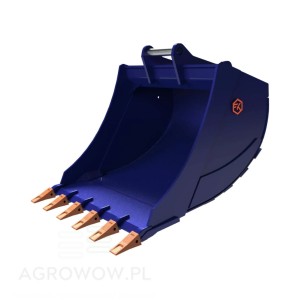
- Manufacturer: Kołaszewski
- Catalogue number: KEBH08
- Manufacturer's name: Backhoe bucket 10-12T
- Width: 800 mm
- Length: 1247 mm
- Height: 792 mm
- Weight: 315 kg
Availability: Dostępny
Kołaszewski backhoe bucket 10–12 T / 1.0 x 0.79 m
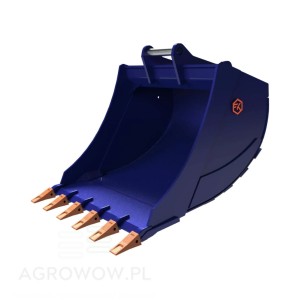
- Manufacturer: Kołaszewski
- Catalogue number: KEBH10
- Manufacturer's name: Backhoe bucket 10-12T
- Width: 1000 mm
- Length: 1247 mm
- Height: 792 mm
- Weight: 361 kg
Availability: Dostępny
Kołaszewski backhoe bucket 10–12 T / 1.2 x 0.79 m
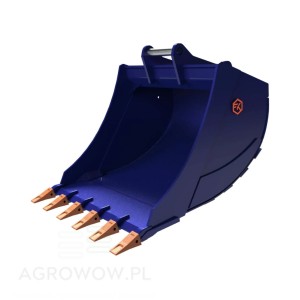
- Manufacturer: Kołaszewski
- Catalogue number: KEBH12
- Manufacturer's name: Backhoe bucket 10-12T
- Width: 1200 mm
- Length: 1247 mm
- Height: 792 mm
- Weight: 407 kg
Availability: Dostępny
Kołaszewski backhoe bucket 12–14 T / 0.8 x 0.99 m
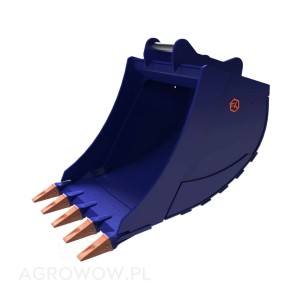
- Manufacturer: Kołaszewski
- Catalogue number: KEBI08
- Manufacturer's name: Backhoe bucket 12-14T
- Width: 800 mm
- Length: 1480 mm
- Height: 993 mm
- Weight: 409 kg
Availability: Dostępny
Kołaszewski backhoe bucket 12–14 T / 1.0 x 0.99 m
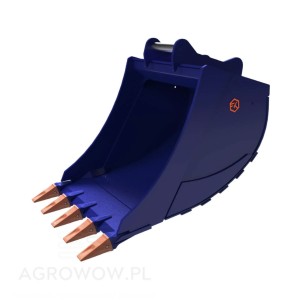
- Manufacturer: Kołaszewski
- Catalogue number: KEBI10
- Manufacturer's name: Backhoe bucket 12-14T
- Width: 1000 mm
- Length: 1480 mm
- Height: 993 mm
- Weight: 470 kg
Availability: Dostępny
Kołaszewski backhoe bucket 12–14 T / 1.2 x 0.99 m
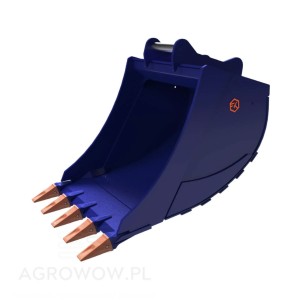
- Manufacturer: Kołaszewski
- Catalogue number: KEBI12
- Manufacturer's name: Backhoe bucket 12-14T
- Width: 1200 mm
- Length: 1480 mm
- Height: 993 mm
- Weight: 531 kg
Availability: Dostępny
Kołaszewski backhoe bucket 14–18 T / 0.8 x 1.02 m
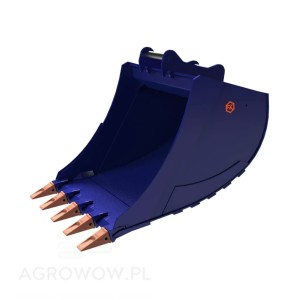
- Manufacturer: Kołaszewski
- Catalogue number: KEBJ08
- Manufacturer's name: Backhoe bucket 14-18T
- Width: 800 mm
- Length: 1712 mm
- Height: 1019 mm
- Weight: 538 kg
Availability: Dostępny
Kołaszewski backhoe bucket 14–18 T / 1.0 x 1.02 m
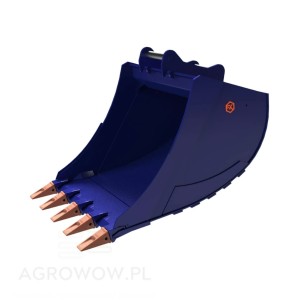
- Manufacturer: Kołaszewski
- Catalogue number: KEBJ10
- Manufacturer's name: Backhoe bucket 14-18T
- Width: 1000 mm
- Length: 1712 mm
- Height: 1019 mm
- Weight: 625 kg
Availability: Dostępny
Kołaszewski backhoe bucket 14–18 T / 1.2 x 1.02 m
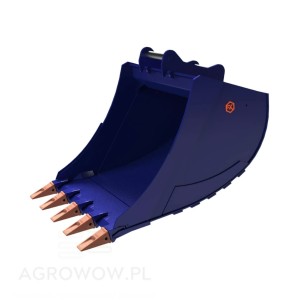
- Manufacturer: Kołaszewski
- Catalogue number: KEBJ12
- Manufacturer's name: Backhoe bucket 14-18T
- Width: 1200 mm
- Length: 1712 mm
- Height: 1019 mm
- Weight: 712 kg
Availability: Dostępny
Kołaszewski backhoe bucket 2.6-3.5 T / 0.8 x 0.49 m
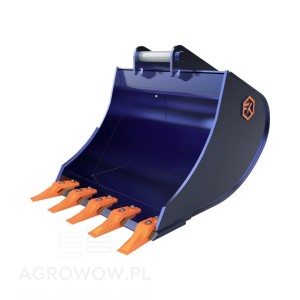
- Manufacturer: Kołaszewski
- Catalogue number: KEBC08
- Manufacturer's name: Backhoe bucket 2.6-3.5T
- Width: 800 mm
- Length: 777 mm
- Height: 492 mm
- Weight: 110 kg
Availability: Dostępny
Backhoe Bucket – Precision and Power for Earthmoving Projects
A trenching bucket is a specialized attachment for excavators and mini-excavators, used primarily for laying underground utility lines, such as power cables, fiber optics, telecommunication lines, and irrigation systems. Thanks to its narrow design, the trenching bucket allows for precise excavation without excessive ground disturbance, which is crucial in built-up areas or where existing underground infrastructure is already present. A characteristic feature of trenching buckets is their varying width, which typically ranges from 15 to 30 cm, allowing the tool to be tailored to specific tasks. Selecting the right trenching bucket can significantly influence both the pace and the accuracy of the work—especially where minimizing environmental impact is a priority. Trenching buckets are also frequently used in residential projects, for instance, to route electrical cables to garden gazebos, gates, or outdoor lighting. When purchasing, it is important to pay attention to the material quality, welding standards, and the presence of reinforcement elements; these factors impact not only the durability of the tool but also the safety of the machine operator. The popularity of trenching buckets has grown significantly in recent years, mainly due to the expansion of the fiber optic and home automation markets, where precise and rapid cable installation is essential. Trenching buckets are also utilized in sewage and water supply works, particularly when there is a need to dig long, narrow trenches without the necessity of excavating the entire property or site.
Extended Trenching Bucket – The Solution for Deep and Precise Excavations
An extended trenching bucket is a tool dedicated primarily to users who work in hard-to-reach areas or require maximum precision at greater depths. Its design features an elongated shank and arm, allowing it to reach locations where a standard trenching bucket might fall short. This type of equipment is ideal for laying cables at significant depths—for example, in urban transit corridors, under roadways, or beneath sidewalks, where it is necessary to pass underneath existing infrastructure. An extended trenching bucket also enables more efficient excavation of long, narrow linear trenches, which significantly speeds up project completion, especially during installation work over longer distances. A key factor is maintaining proper balance and center of gravity; reputable manufacturers ensure the construction is robust without excessively loading the excavator's arm, which enhances operator comfort and safety. An additional advantage is the ability to attach various types of teeth or cutting edges, allowing the tool to be adapted to the soil type—from soft sand to clay or gravel. Extended trenching buckets are increasingly chosen by companies specializing in fiber optic cable installation, smart home systems, and energy grid operations. Their versatility and precision also make them successful in hydrotechnical and land reclamation work, where maintaining a narrow trench at significant depths is essential.
Long Trenching Bucket – Greater Reach, Greater Possibilities
A long trenching bucket is a version of the tool with an increased working reach, enabling large-scale excavations without the need to constantly reposition the machine. It is an ideal solution for companies installing linear infrastructure, such as fiber optics, power lines, or water and sewage pipes, which require continuous, precise trenching. Thanks to the increased length of the arm, work can be carried out faster over longer sections, which directly translates to reduced operating costs and shorter project timelines. Long buckets are particularly useful in open areas, such as fields, meadows, or road corridors, where workspace is not restricted and efficiency is paramount. Depending on the model, the length of the bucket can be tailored to individual needs—many manufacturers also offer custom-made buckets to suit the specific requirements of a given business. The increased length also allows for easier operation in difficult terrain conditions, such as deep excavations in unstable soil. It is also worth noting the technical aspects: long trenching buckets are typically equipped with additional reinforcements to prevent bending or damage during intensive use. Users also value the ability to operate in trenches of varying depths, which is useful when navigating around terrain or infrastructure obstacles. A long trenching bucket is an investment that pays for itself quickly, especially for companies executing large-scale infrastructure, road, or energy projects.
Trenching Bucket for Mini-Excavators – Maximum Functionality in a Compact Size
A trenching bucket for a mini-excavator is the ideal solution for users working in confined spaces—such as home gardens, narrow construction plots, city centers, or industrial zones with limited access. Thanks to their mobility and compact size, mini-excavators have gained immense popularity among companies installing electrical, fiber optic, and sewage systems, and trenching buckets for these machines have become an essential daily tool. Due to its precise design, a mini-excavator trenching bucket allows for narrow, accurate excavations, minimizing the risk of damaging existing underground infrastructure. This is particularly important in areas where utilities are already present, such as during cable replacement or network expansion. Compatibility is also a key factor; most manufacturers offer trenching buckets tailored to popular mini-excavator models, such as Kubota, Takeuchi, JCB, Yanmar, or Bobcat. The weight of the tool is another critical aspect—an excessively heavy bucket can negatively affect machine stability, making the selection of the right model vital. These buckets are often equipped with quick-hitch systems, allowing for near-instant tool changes on-site. The economic aspect is also significant; the lower fuel consumption and operating costs of mini-excavators make them a preferred choice for both small businesses and large enterprises executing projects in urban environments. With its compact design and high functionality, a trenching bucket for a mini-excavator successfully combines precision with cost-efficiency.
Deep Trenching Bucket – A Specialized Tool for Advanced Excavations
A deep trenching bucket is a tool designed for the most demanding earthmoving tasks, where it is necessary to reach significant depths while maintaining precision and minimal trench width. These buckets are primarily used in the construction of deep water and sewage installations, heating pipelines, medium and high-voltage power cables, and drainage systems. Thanks to its construction—characterized by a long and slender profile—a deep trenching bucket allows for efficient penetration through soil layers without the need to widen the trench, which is particularly crucial in city centers or built-up areas. The use of high-abrasion-resistant steel is another key element, guaranteeing the tool's longevity even under intensive use. These buckets often feature additional reinforcement elements, such as side cutters, stiffening ribs, or double-bottom designs, which enhance their durability in the toughest conditions. Operators also value the compatibility with hydraulic quick-hitches, which significantly streamline equipment changes in dynamic working environments. The deep trenching bucket finds application not only in the infrastructure sector but also in open-pit mining, railway construction, and industrial installation projects. Its selection is often determined by the specifics of the contract—the greater the required depth and precision of the excavation, the more justified the use of this specialized tool. In an era of increasing demand for underground technological systems, the deep trenching bucket is becoming an indispensable element of the modern construction site.