


Categories
Availability
Price
-
from
to
A meadow and field drag is an indispensable agricultural machine designed for the effective maintenance of meadows, pastures, and arable fields. It is excellent for soil work, enabling effective field harrowing, terrain leveling, and improvement of soil structure. The meadow drag eliminates molehills, breaks up surface crusting, and supports meadow harrowing, increasing soil fertility. Its solid, heavy construction ensures durability, while the tractor hitch facilitates easy operation. A chain-type soil drag is a reliable tool for soil regeneration and optimizing plant growth.
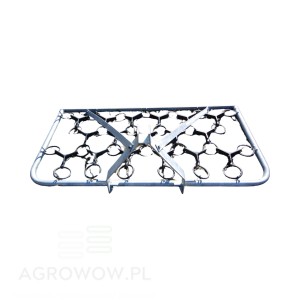
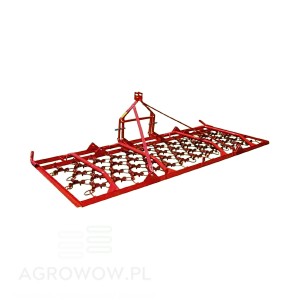
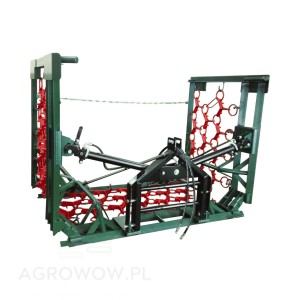
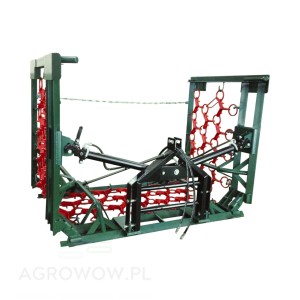
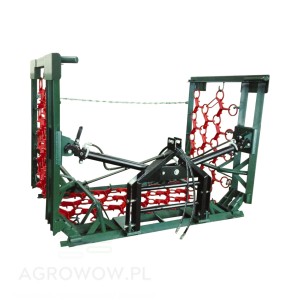
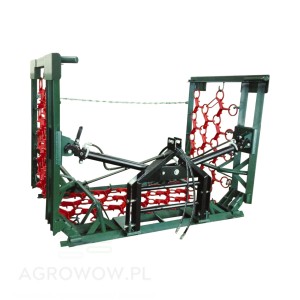
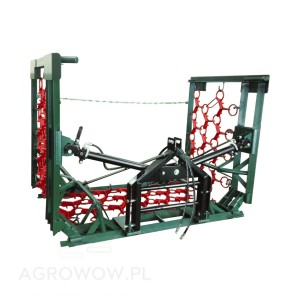
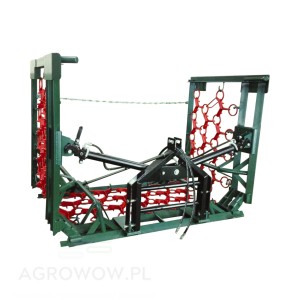
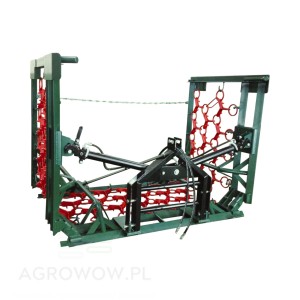
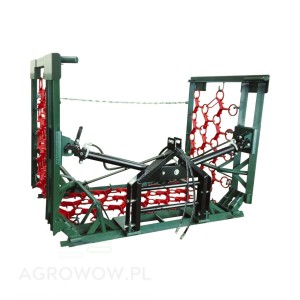
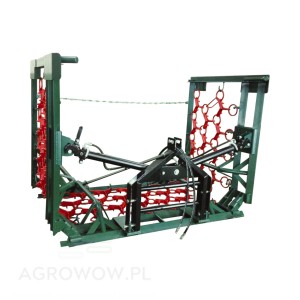
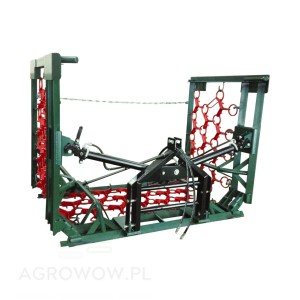
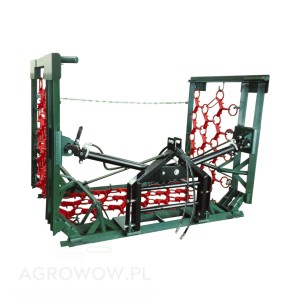
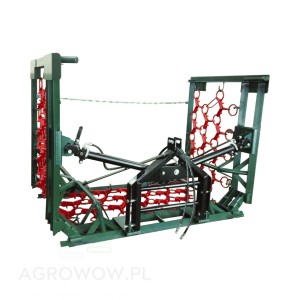
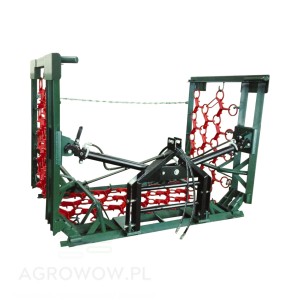
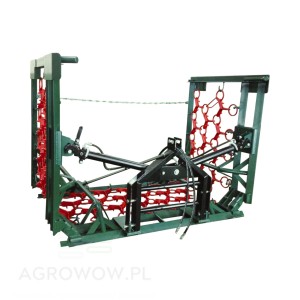
Meadow Drag – An Indispensable Machine for Maintaining Meadows and Pastures
A meadow drag is an essential tool for farms specializing in animal husbandry and grass cultivation for fodder. It is a device used for meadow maintenance by leveling the surface, spreading molehills, destroying couch grass and other weeds, and aerating the soil. Thanks to the meadow drag, it is possible to achieve uniform grass growth and increase yields, which directly affects the quality of animal feed. The design of a meadow drag is simple yet highly effective. It consists of a frame to which working elements in the form of teeth, tines, or chains are attached. During operation, these elements penetrate the soil to a shallow depth, which allows for the removal of irregularities, the breaking up of soil clods, and the removal of moss. Additionally, dragging a meadow contributes to stimulating grass growth by promoting tillering. The use of a meadow drag is particularly important in early spring, when molehills, irregularities, and rotten plant residues appear on meadows after the winter season. Performing the dragging procedure allows for the preparation of the meadow for vegetation and facilitates later mowing. Regular use of this tool contributes to maintaining high-quality grasslands for many years. Various models of meadow drags are available on the market, differing in working width, design of the working elements, and the method of attachment to the tractor. The choice of the appropriate model depends on the size of the farm, the type of grasslands cultivated, and the equipment owned. It is important that the meadow drag be solidly constructed, which will ensure its durability and effectiveness for many seasons.
Field Drag – An Effective Tool for Leveling and Loosening Soil
A field drag is agricultural equipment designed for work in arable fields. Its primary task is leveling the soil surface after plowing, breaking up soil clods, destroying weeds, and preparing the field for sowing. The field drag is indispensable in the tillage process, especially for farms striving to achieve high-quality crops and optimal yields. The construction of a field drag is based on a solid frame to which working elements in the form of teeth, blades, or chains are attached. As it travels across the field, these elements penetrate the soil, breaking up surface crusts, smoothing the surface, and mixing post-harvest residues with the soil. As a result, the soil becomes looser, which promotes better seed emergence and the development of the plant root system. Using a field drag is particularly important in the spring, before sowing begins. Proper soil preparation is crucial for uniform seed distribution and rapid germination. Furthermore, dragging the field helps reduce the number of weeds by mechanically destroying their seedlings, which reduces the need for chemical agents. Various types of field drags are available on the market, differing in working width, type of working elements, and method of aggregation with a tractor. The choice of the appropriate model depends on the size of the farm, the type of soil, and the equipment owned. Field drags can be light, intended for use on light soils, or heavier, which work well on compacted soils. Investing in a high-quality field drag is a decision that brings many benefits. Improving soil structure translates into better growth conditions for plants, which in turn leads to higher yields. Additionally, using this tool contributes to saving time and fuel, thanks to the effective execution of several agrotechnical procedures in a single pass.
Soil Drag Effectively Loosens, Aerates, and Prepares Soil for Further Cultivation
Preparing soil for sowing and cultivation requires the use of appropriate tools that ensure optimal conditions for plant growth. One such tool is the drag, which is used for surface soil treatment. A soil drag is primarily used to level the surface, break up clods, destroy weeds, and mix post-harvest residues with the soil. By using a soil drag, it is possible to achieve a uniform soil structure, which is crucial for even seed emergence. A leveled surface also facilitates subsequent maintenance procedures and harvesting. Additionally, dragging helps in aerating the soil, which favors the activity of soil microorganisms and improves the nutrient uptake by plants. A soil drag can be used on various types of soil, but its effectiveness depends on the proper selection of the model and settings according to the specifics of the ground. On heavy soils, it is recommended to use heavier drags, which more effectively break up clods and penetrate surface crusts. On light soils, however, lighter construction drags may be sufficient. An important aspect is also the appropriate timing for performing the dragging procedure. The best results are obtained when the soil is slightly moist, which enables effective breaking up of clods and facilitates the operation of the tool. Work should be avoided in conditions of excessive moisture, as this can lead to the destruction of soil structure and the formation of ruts. The use of a soil drag also contributes to reducing soil erosion by maintaining an even surface and preventing excessive runoff of rainwater. Furthermore, mechanical weed control allows for a reduction in the amount of herbicides used, which is beneficial for both the environment and the farm's economy.
Tractor Drag – A Solid and Efficient Tool, Easy to Connect to Any Tractor Model
Drags designed to work with an agricultural tractor are a key piece of equipment for every farm. A tractor drag enables the efficient and fast execution of agrotechnical procedures on large areas, which is essential for optimizing working time and utilizing available resources. By aggregating with a tractor, the drag can operate at higher speeds and at greater depths than manual tools or those pulled by draft animals. This allows for effective leveling of the field surface, breaking up soil clods, destroying weeds, and mixing post-harvest residues with the soil. As a result, the soil is better prepared for sowing, and plant growth conditions are significantly improved. A tractor drag is easy to install and operate. Equipped with a standard suspension system, it can be quickly connected to a tractor and adjusted to specific working conditions. Adjusting the working depth and the angle of attack of the working elements allows for optimal adaptation of the tool to the soil type and desired results. Various models of tractor drags are available on the market, ranging from light structures intended for work on light soils to heavy drags for special tasks. The choice of the appropriate model should take into account the power of the available tractor, the size and characteristics of the arable fields, and the planned agrotechnical procedures. Using a tractor drag brings many benefits. It allows for increased work efficiency, savings in time and fuel, as well as an improvement in crop quality. Additionally, mechanical agrotechnical procedures are more environmentally friendly than using chemical agents, which aligns with the trend of sustainable agriculture.
Heavy Drag – A Sturdy Construction for Effective Dragging Even in Difficult Conditions
A heavy drag is a specialized agricultural tool designed for intensive field work on compacted soils that are difficult to cultivate. Its massive construction and significant weight allow for deeper soil penetration, effective breaking up of hard clods, removal of crusting, and leveling of the field surface. The use of a heavy drag is particularly important on farms with heavy clay or loam soils. These soil types tend to form a hard crust after rain or during periods of drought, which hinders gas exchange and water penetration. Dragging with a heavy drag enables this crust to be broken up, improving conditions for plant development and the activity of soil organisms. A heavy drag is also effective in the mechanical control of weeds and post-harvest residues. Its massive working elements deeply penetrate the soil, cutting off weed roots and mixing organic residues with the earth. This reduces the population of unwanted plants and improves soil structure by increasing the organic matter content. Working with a heavy drag, however, requires appropriate equipment. The tractor must have sufficient power to handle the load and resistance posed by the tool. It is also important to properly set operating parameters, such as depth and speed, to ensure efficiency and avoid excessive wear and tear on the equipment. Investing in a heavy drag is cost-effective for farms with specific soil conditions. Improving soil structure and plant growth conditions translates into higher yields and better production quality. Additionally, thanks to mechanical soil cultivation, it is possible to reduce the use of chemical agents, which is beneficial for the environment and human health.
Agricultural Drag – Ensuring High-Quality Soil on Every Farm
An agricultural drag is a universal tool used on farms for various agrotechnical procedures related to soil cultivation. Its versatility and efficiency make it widely used on both small and large arable fields. An agricultural drag helps in leveling the soil surface, breaking up clods, destroying weeds, and mixing post-harvest residues with the soil. The design of an agricultural drag includes a frame to which working elements, such as teeth, blades, or chains, are attached. Depending on the model and intended use, the drag can be equipped with different types of elements, allowing it to be adapted to specific needs and soil conditions. This makes the tool extremely flexible, enabling its use at various stages of cultivation. The use of an agricultural drag contributes to improving sowing conditions by creating an even and loose soil surface. Field leveling is particularly important for the uniform distribution of seeds and plant roots, which influences their healthy growth and development. Furthermore, dragging helps in the mechanical control of weeds, which can reduce the need for herbicides. The agricultural drag is easy to operate and can be aggregated with most agricultural tractors. Through the adjustment of operating parameters, such as depth or angle of attack, it is possible to precisely adapt the tool to current needs. This makes the drag an economical and efficient tool to operate. Investing in a high-quality agricultural drag is a decision that brings benefits in the form of higher yields, better crop quality, and time savings. Additionally, mechanical tillage practices support sustainable agriculture by reducing chemical usage and protecting the natural environment.
Meadow and Field Drag – Suitable for Maintaining Both Meadows and Arable Fields
A meadow and field drag is a specialized tool that combines the functions of both a meadow drag and a field drag. It is a versatile device intended for the maintenance of meadows and pastures, as well as for work on arable fields. Thanks to this versatility, the meadow and field drag is an ideal solution for farms managing diverse crops and livestock. The design of the meadow and field drag allows for effective surface leveling, breaking up soil clods, and destroying molehills and couch grass on meadows, as well as preparing soil for sowing in fields. The working elements, such as teeth, tines, or chains, are designed to work effectively on various types of substrates without damaging the turf on meadows. Using a meadow and field drag on meadows contributes to improving the quality of grasslands by aerating the soil, stimulating grass tillering, and removing terrain irregularities. In arable fields, dragging helps prepare the soil for sowing by leveling the surface and mixing post-harvest residues with the earth. The versatility of the meadow and field drag allows for the optimization of investment costs, as one device can fulfill the functions of two separate tools. This is particularly beneficial for small and medium-sized farms with limited budgets for agricultural equipment. The meadow and field drag can be aggregated with various types of tractors, and thanks to the ability to adjust operating parameters, it can be adapted to specific terrain and soil conditions. Its solid construction ensures durability and reliability, which is important in the context of intensive use.
Meadow Harrow – Indispensable for Removing Molehills and Loosening Turf, Improving Grass Growth Conditions
A meadow harrow is a specialized tool designed for the maintenance of grasslands, such as meadows and pastures. Its primary task is to improve grass growth conditions by aerating the soil, removing moss, destroying couch grass, and evenly distributing plant residues and molehills. These actions contribute to increased yields and improved quality of fodder for livestock. The design of the meadow harrow is based on a frame to which special teeth or tines made of durable materials are attached. These working elements penetrate the soil to a shallow depth, allowing for gentle loosening without damaging the turf. As a result, the soil's permeability to water and air is improved, which promotes the development of the grass root system. Using a meadow harrow is particularly important in early spring, when molehills, irregularities, and rotten plant residues appear on the meadows after the winter. Harrowing helps in their removal and prepares the grasslands for the new growing season. Regular treatments with a meadow harrow contribute to rejuvenating the turf and increasing its resistance to adverse weather conditions. The meadow harrow is easy to operate and can be used in combination with a low-power tractor, which is beneficial for farms with smaller equipment. The ability to adjust working depth and the angle of attack allows for adapting the tool to specific terrain conditions and the needs of the grasslands. Investing in a meadow harrow is cost-effective, as it contributes to improving the quality and productivity of meadows and pastures. Better quality fodder translates into the health and productivity of livestock, which directly impacts the farm's profitability.
Field Dragging – A Key Agrotechnical Procedure That Improves Soil Structure and Increases Yields
Field dragging is an important agrotechnical procedure consisting of surface soil treatment using a drag. The goal of this procedure is to level the field surface, break up soil clods, destroy weeds and post-harvest residues, and prepare the soil for sowing. Dragging improves soil structure, which promotes uniform seed emergence and healthy plant growth. Performing the dragging procedure is particularly important after plowing, when large soil clods and irregularities remain on the field surface. The drag helps in breaking them down and distributing them evenly, which facilitates subsequent sowing and maintenance operations. Furthermore, dragging contributes to mechanical weed control by pulling them out or covering them with soil, which limits their growth. The optimal time for field dragging is when the soil is slightly moist and susceptible to cultivation. Working in conditions where the soil is too wet or too dry can be less effective and lead to damage to the soil structure. It is also worth adjusting the depth and intensity of dragging depending on the soil type and the desired effect. The benefits of field dragging include better sowing conditions, increased water retention in the soil, and improved aeration and activity of soil microorganisms. The result is healthier plant development and higher yields. Additionally, dragging can contribute to savings in time and fuel, thanks to the effective execution of several procedures in a single pass.
Soil Drag – Used for Leveling and Preparing Soil for Cultivation
A soil drag is an agricultural tool used for surface soil treatment. Its primary task is to level the field surface, break up clods, destroy crusting, and mix plant residues with the soil. The soil drag plays a significant role in preparing the soil for sowing and ensuring optimal conditions for plant growth. By using a soil drag, a farmer can achieve an even and loose soil surface, which is crucial for uniform seed distribution and germination. Dragging also promotes soil aeration and increases its water absorption capacity, which positively influences the development of the plant root system. A soil drag can be used at various stages of cultivation, both after plowing and before sowing. Its use is particularly important on heavy soils that tend to form crusts and large soil clods. Regular dragging helps maintain soil structure and prevents the formation of unfavorable conditions for plant growth. The choice of the appropriate soil drag depends on the soil type, the size of the field, and the equipment owned. Models with different working widths and designs are available on the market, allowing the tool to be adapted to the individual needs of the farm. It is important that the drag be solidly constructed and equipped with working elements suitable for the specifics of the soil.
Dragging – An Effective Way to Aerate Soil and Eliminate Terrain Irregularities
Dragging is an agrotechnical procedure consisting of surface soil treatment using a drag. The goal of dragging is to improve soil structure by leveling its surface, breaking up clods, destroying crusting, and mixing plant residues with the earth. This procedure plays a key role in preparing the soil for sowing and ensuring optimal conditions for plant growth. Dragging is particularly important after plowing, when large soil clods and irregularities remain on the field surface. By driving a drag over the field, these clods are broken up and the surface is leveled, which facilitates subsequent sowing operations. Dragging also promotes soil aeration and increases its ability to retain water. An important aspect of dragging is also mechanical weed control. The drag pulls out young weed seedlings or covers them with soil, which limits their growth without the need for herbicides. Thanks to this, dragging fits into sustainable agriculture practices, reducing the impact of chemicals on the environment. When performing dragging, one should pay attention to soil and weather conditions. The best results are obtained on slightly moist soils. Soil that is too wet or too dry can hinder work and reduce the effectiveness of the procedure. It is also important to adjust the speed and working depth of the drag to the specifics of the field and the crops.
Basic Maintenance Process: Meadow Dragging Ensures Better Conditions for Plant Growth
Meadow dragging is a maintenance procedure consisting of surface treatment of grasslands using a meadow drag. The goal of meadow dragging is to improve the quality of the grass turf by leveling the surface, spreading molehills, removing rotten plant residues, and aerating the soil. Thanks to this procedure, the meadow becomes more productive and provides fodder of higher nutritional value. Performing meadow dragging is particularly important in early spring, after the winter period. Winter weather conditions often lead to the formation of molehills, irregularities, and the accumulation of dead plant residues. Dragging helps in their removal, which promotes uniform grass growth and facilitates later mowing. This procedure also contributes to stimulating grass tillering, which increases the density and homogeneity of the turf. Aerating the soil through dragging improves conditions for the development of the root system and the activity of soil microorganisms. As a result, the meadow is more resistant to adverse weather conditions and diseases. Meadow dragging can be performed using specialized meadow drags, which are adapted to the delicate structure of the turf. It is important to perform the procedure in appropriate conditions, avoiding soil that is too wet, which could be damaged by heavy equipment.
Strong and Durable Chain Drag – Guaranteed High Effectiveness on Large Areas
A chain drag is a type of agricultural drag that uses chain segments as its main working element. Its construction consists of a frame to which chains are attached, equipped with teeth or blades. This design allows for flexible operation, enabling the tool to effectively adapt to terrain irregularities and ensure uniform impact on the soil surface. The chain drag is particularly effective in breaking up soil clods, leveling the field surface, and mixing post-harvest residues with the soil. The flexibility of the chains allows for gentle handling of meadow turf without causing damage, while simultaneously effectively removing irregularities and debris. The use of a chain drag is versatile. It can be utilized on arable fields, meadows, and pastures alike. Its effectiveness is especially noticeable on uneven terrain and on soils with a tendency to form clods and crusts. The chain drag is easy to operate and can be aggregated with most agricultural tractors. Adjusting operating parameters allows the tool to be tailored to specific soil conditions and desired results. A solid construction and durable materials ensure the long service life of the equipment.
Efficient 6-Meter Meadow Drag – Designed for Maintaining Large Areas
A drag with a working width of 6 meters is an efficient tool designed for treating large areas in a short amount of time. The 6m wide drag is ideal for large agricultural farms where the efficient use of time and equipment to perform agrotechnical procedures on vast fields is crucial. Thanks to its 6-meter width, the drag enables coverage of a large area with fewer passes, which translates into savings in fuel and time, as well as a reduction in soil compaction caused by tractor wheels. This is particularly important in the context of preserving soil structure and its capacity to retain water and air. The 6m drag can be equipped with folding wings, which facilitates transport on public roads and storage. A solid construction and the appropriate selection of materials ensure durability and reliability even with intensive use. Working with a drag of this width, however, requires a suitable tractor with sufficient power and stability. It is also important for the operator to have experience in handling wide equipment to ensure safety and precision during operation.