


- Agricultural machinery
- Construction machinery
- Forestry & Logging
- Municipal Equipment
- Trailers and boxes
- New products
- Products on sale
Categories
Availability
Price
-
from
to
Soil cultivation is a key stage of any crop production, requiring proper preparation of the soil for sowing. Thanks to the use of modern tools, such as tillage combinations, plows, cultivators, rotary tillers, or rollers, it is possible to increase soil fertility, improve its structure, and optimize hydration. Check out which machines will perform best on your farm!
Agrowow 2-bottom bed plow ORLIK
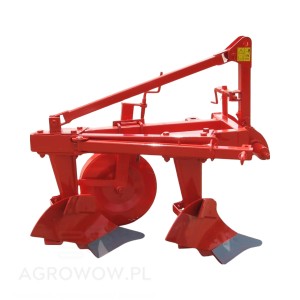
- Manufacturer: Agrowow
- Catalogue number: BA02PZO
- Manufacturer's name: Conventional plow Orlik
- Working width: 500 mm
- Weight: 180 kg
- Number of furrows: 2 (2-bottom)
- Power requirement: 22 HP
Availability: Dostępny
Agrowow 3-bottom agricultural plow with leaf spring protection
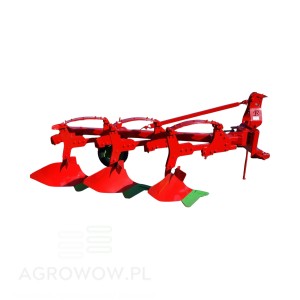
- Manufacturer: Agrowow
- Catalogue number: BA03PJR
- Manufacturer's name: Single-beam plow with leaf spring protection
- Working width: 840–1200 mm
- Weight: 670 kg
- Number of furrows: 3 (3-bottom)
- Power requirement: 85 HP
Availability: Dostępny
Agrowow 3-bottom agricultural plow with shear bolt protection
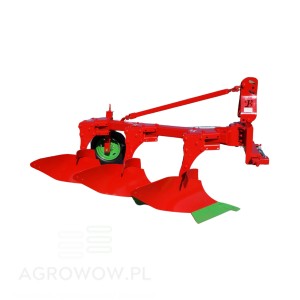
- Manufacturer: Agrowow
- Catalogue number: BA03PJK
- Manufacturer's name: Single-beam plow with shear bolt protection
- Working width: 840–1200 mm
- Weight: 550 kg
- Number of furrows: 3 (3-bottom)
- Power requirement: 85 HP
Availability: Dostępny
Agrowow 3-bottom bed plow
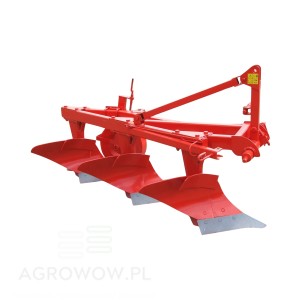
- Manufacturer: Agrowow
- Catalogue number: BA03PZZ
- Manufacturer's name: Conventional plow
- Working width: 600 mm
- Weight: 210 kg
- Number of furrows: 3 (3-bottom)
- Power requirement: 32 HP
Availability: Dostępny
Agrowow 3-bottom bed plow ORLIK
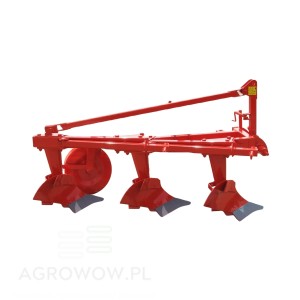
- Manufacturer: Agrowow
- Catalogue number: BA03PZO
- Manufacturer's name: Conventional plow Orlik
- Working width: 750 mm
- Weight: 235 kg
- Number of furrows: 3 (3-bottom)
- Power requirement: 33 HP
Availability: Dostępny
Agrowow 3-bottom bed plow with raised frame
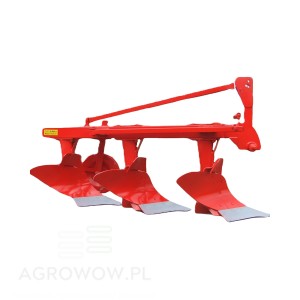
- Manufacturer: Agrowow
- Catalogue number: BA03PZP
- Manufacturer's name: High-clearance conventional plow
- Working width: 900 mm
- Weight: 300 kg
- Number of furrows: 3 (3-bottom)
- Power requirement: 48 HP
Availability: Dostępny
Agrowow 3-bottom bed plow with raised frame and shear bolt protection – ATLAS
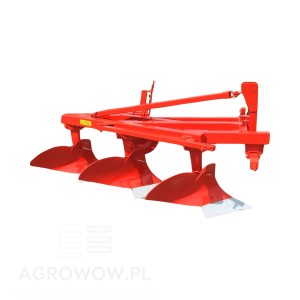
- Manufacturer: Agrowow
- Catalogue number: BA03PPZ
- Manufacturer's name: High-clearance conventional plow ATLAS with shear bolt protection
- Working width: 1200 mm
- Weight: 450 kg
- Number of furrows: 3 (3-bottom)
- Power requirement: 68 HP
Availability: Dostępny
Agrowow 3-bottom bed plow with raised frame – ATLAS
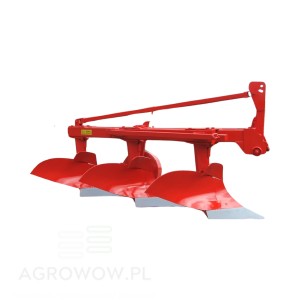
- Manufacturer: Agrowow
- Catalogue number: BA03PZA
- Manufacturer's name: High-clearance conventional plow ATLAS
- Working width: 1050 mm
- Weight: 400 kg
- Number of furrows: 3 (3-bottom)
- Power requirement: 56 HP
Availability: Dostępny
Agrowow 3-bottom reversible agricultural plow
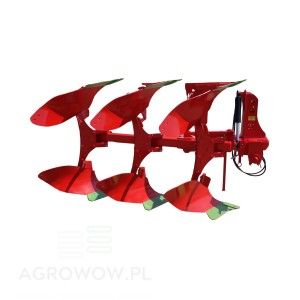
- Manufacturer: Agrowow
- Catalogue number: BA03PO
- Manufacturer's name: Reversible plow
- Working width: 840–1200 mm
- Weight: 1000 kg
- Number of furrows: 3 (3-bottom)
- Power requirement: 90 HP
Availability: Dostępny
Agrowow 4-bottom agricultural plow with leaf spring protection
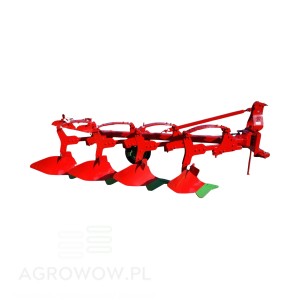
- Manufacturer: Agrowow
- Catalogue number: BA04PJR
- Manufacturer's name: Single-beam plow with leaf spring protection
- Working width: 1120–1600 mm
- Weight: 810 kg
- Number of furrows: 4 (4-bottom)
- Power requirement: 95 HP
Availability: Dostępny
Agrowow 4-bottom agricultural plow with shear bolt protection
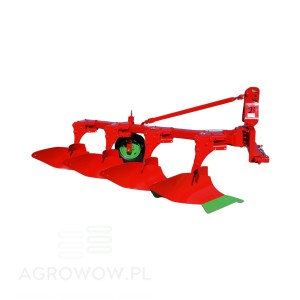
- Manufacturer: Agrowow
- Catalogue number: BA04PJK
- Manufacturer's name: Single-beam plow with shear bolt protection
- Working width: 1120–1600 mm
- Weight: 650 kg
- Number of furrows: 4 (4-bottom)
- Power requirement: 95 HP
Availability: Dostępny
Agrowow 4-bottom bed plow
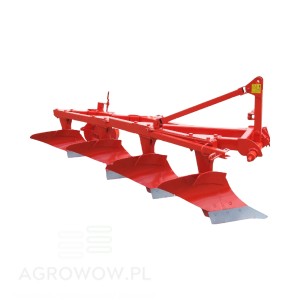
- Manufacturer: Agrowow
- Catalogue number: BA03PZZ
- Manufacturer's name: Conventional plow
- Working width: 900 mm
- Weight: 285 kg
- Number of furrows: 4 (4-bottom)
- Power requirement: 48 HP
Availability: Dostępny
Agrowow 4-bottom bed plow ORLIK
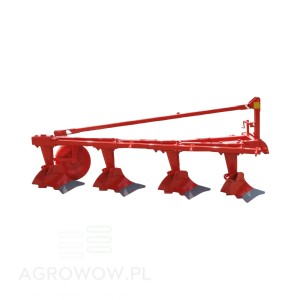
- Manufacturer: Agrowow
- Catalogue number: BA04PZO
- Manufacturer's name: Conventional plow Orlik
- Working width: 1000 mm
- Weight: 320 kg
- Number of furrows: 4 (4-bottom)
- Power requirement: 44 HP
Availability: Dostępny
Agrowow 4-bottom bed plow with raised frame
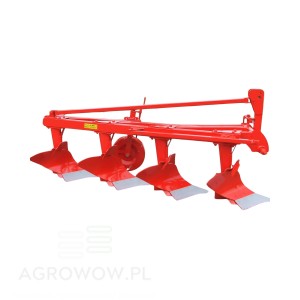
- Manufacturer: Agrowow
- Catalogue number: BA04PZP
- Manufacturer's name: High-clearance conventional plow
- Working width: 1200 mm
- Weight: 420 kg
- Number of furrows: 4 (4-bottom)
- Power requirement: 64 HP
Availability: Dostępny
Agrowow 4-bottom bed plow with raised frame and shear bolt protection – ATLAS
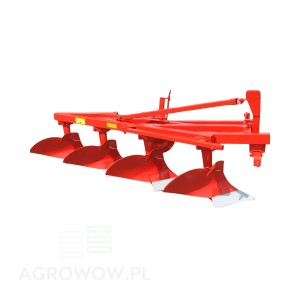
- Manufacturer: Agrowow
- Catalogue number: BA04PPZ
- Manufacturer's name: High-clearance conventional plow ATLAS with shear bolt protection
- Working width: 1600 mm
- Weight: 550 kg
- Number of furrows: 4 (4-bottom)
- Power requirement: 74 HP
Availability: Dostępny
Agrowow 4-bottom bed plow with raised frame – ATLAS
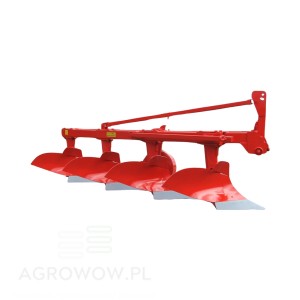
- Manufacturer: Agrowow
- Catalogue number: BA04PZA
- Manufacturer's name: High-clearance conventional plow ATLAS
- Working width: 1400 mm
- Weight: 490 kg
- Number of furrows: 4 (4-bottom)
- Power requirement: 72 HP
Availability: Dostępny
Agrowow 4-bottom reversible agricultural plow
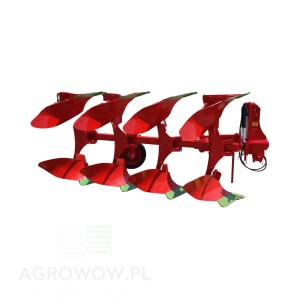
- Manufacturer: Agrowow
- Catalogue number: BA04PO
- Manufacturer's name: Reversible plow
- Working width: 1120–1600 mm
- Weight: 1200 kg
- Number of furrows: 4 (4-bottom)
- Power requirement: 110 HP
Availability: Dostępny
Agrowow 5-bottom agricultural plow with leaf spring protection
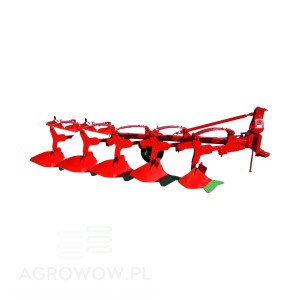
- Manufacturer: Agrowow
- Catalogue number: BA05PJR
- Manufacturer's name: Single-beam plow with leaf spring protection
- Working width: 1400–2000 mm
- Weight: 950 kg
- Number of furrows: 5 (5-bottom)
- Power requirement: 110 HP
Availability: Dostępny
The Stubble Cultivator – A Strong Start for Every Crop
The stubble cultivator is one of the fundamental tools for primary post-harvest soil cultivation, used in the process of preparing the field for new sowing. Its task is not only the shallow loosening of the topsoil but also the thorough mixing of crop residues, which supports natural biological processes in the soil. Thanks to the use of a stubble cultivator, it is possible to effectively limit the growth of weeds and pests that could threaten future crops. Modern models offer adjustable working depth and various configurations of discs and tines, allowing the machine to be adapted to the individual needs of the farm. This tool serves perfectly as the first step in a multi-stage soil cultivation process, ensuring optimal conditions for subsequent agrotechnical operations. Using a stubble cultivator increases soil permeability, improves its structure, and leads to more efficient water absorption, which – combined with proper fertilization – translates into higher crop yields. Farmers choosing this equipment also value its efficiency and compatibility with various types of tractors, making it a versatile solution for any farm.
Intensive Soil Cultivation Only with a 3m Disc Cultivator
The 3m compact disc harrow is an excellent solution for farmers looking for efficient equipment for intensive and precise soil cultivation. Its main task is the thorough shredding of the soil and mixing it with organic residues, which improves soil structure and prepares it for sowing. Thanks to its 3-meter working width, this cultivator allows for fast and efficient operations even across large acreages, translating into time and fuel savings. The discs, set at the right angle, ensure intensive cutting and mixing of the soil while reducing surface crusting and improving air access to plant roots. Modern models of disc harrows are equipped with rear rollers (repacker rollers) that additionally level the field and support moisture retention. This is particularly important during drought conditions, where every drop of water is worth its weight in gold. The 3m disc harrow is ideal equipment for farms focused on high crop yields that need robust and reliable machines for daily field work. Due to its design, it is also easy to operate and maintain, which further increases its appeal among users.
The Seedbed Cultivator – A Versatile Solution for Every Field
Seedbed cultivators are exceptionally versatile agricultural machines that combine the functions of multiple tools, such as harrows, field cultivators, and cage rollers. They are used for loosening, mixing, and leveling the soil before sowing, which is crucial for achieving high-quality crop yields. The use of tillage combinations allows multiple agrotechnical operations to be performed in a single pass, significantly reducing fuel costs and labor inputs. Thanks to the ability to adjust the working depth, disc angles, and the type of working tines, these machines can be easily adapted to the soil type and the specific crop. Seedbed cultivators are utilized in both conventional and organic farms, where minimal disruption to the soil structure is essential. Modern models increasingly offer automatic adjustment of operating parameters and compatibility with GPS systems. Their advantages also include easy maintenance and a robust design, which translates into a long lifespan and reliability under challenging field conditions. A seedbed cultivator is an investment that pays off quickly by increasing the efficiency and quality of cultivation work.
Break the Soil with a Subsoiler and Increase Your Yields
The compact tractor subsoiler is a specialized agricultural tool designed for deep soil loosening without turning it over. It is primarily used to break up the plow pan (hardpan), which forms at a depth of a dozen or so centimeters, hindering water penetration and the development of plant root systems. Subsoilers mounted on compact tractors are an ideal solution for smaller farms, where precision and maneuverability are key. Thanks to its compact design and robust working tines, the subsoiler improves soil structure at a significant depth, resulting in better plant growth and higher resilience during dry spells. Another advantage of this tool is its capability to operate under challenging soil conditions, such as compacted, clayey, or heavily exploited soils. Regular use of a subsoiler also reduces the risk of waterlogging and improves oxygen conditions in the deeper layers of the soil profile. For farmers who care about healthy soil structure and long-term fertility, the compact tractor subsoiler provides invaluable support in modern soil cultivation.
The Rotary Tiller – Fast and Thorough Soil Cultivation
The rotary tiller is one of the most frequently used tools for mechanical soil cultivation, especially on small and medium-sized farms. Its task is to thoroughly shred and loosen the soil, which significantly improves its structure, facilitates aeration, and enhances water absorption. Rotary tillers perform excellently both in preparing the ground for sowing and in inter-row cultivation. Modern models offer adjustable working depth and width, allowing the machine to be adapted to the soil type and specific crop requirements. Thanks to the use of a rotary tiller, field preparation time can be significantly shortened, the need for multiple passes reduced, and soil compaction minimized. These machines are easy to operate, economical, and efficient, making them an ideal solution for individual farmers, as well as vegetable and ornamental plant growers. A rotary tiller is a piece of equipment that should be found on every farm focused on precise soil cultivation.
The Disc Harrow – Mixing Residues and Improving Soil Structure
The disc harrow (also known as a disc cultivator) is a tool used for shallow soil cultivation and the effective mixing of crop residues. It is indispensable for post-harvest work and in preparing the soil for new sowing. Discs with a notched or smooth profile cut and mix organic matter, creating a uniform soil layer with a good structure. Modern disc harrows are available in various working widths and configurations, allowing them to be adapted to the tractor's power and the soil type. The advantages of disc harrows include their operating speed, the ability to perform operations under high moisture conditions, and the reduction of soil erosion due to less soil inversion. Their application improves the efficiency of fertilizers and facilitates subsequent agrotechnical treatments. In modern agriculture, the disc harrow plays a key role in maintaining good soil health and minimizing cultivation costs.
The Disc Plow for Soil Shredding and Inversion
The disc plow is one of the most versatile agricultural tools, particularly recommended for working on heavy, stony, or wet soils. Unlike traditional moldboard plows, disc models utilize a system of rotating discs that effectively cut and invert the soil layer, mixing it with crop residues. This operational design ensures that the disc plow does not clog easily and handles challenging field conditions excellently. Additionally, by properly adjusting the disc angle, it is possible to precisely tailor the depth and intensity of the plowing, resulting in better field preparation for crops. Disc plows are available in single- and multi-section versions, and modern models are often equipped with hydraulic systems for adjusting working positions. Their robust construction and low operating costs make them an exceptionally cost-effective choice for both large-scale farms and smaller agricultural producers.
The Harrow for Leveling and Loosening the Soil Surface
The harrow is an indispensable tool at every stage of soil cultivation, both before sowing and after plant emergence. Its main task is breaking up the soil crust, leveling the field surface, and mechanically controlling weeds. Depending on the type of tines or discs used, harrows are divided into light, medium, and heavy models, which enables their wide application – from sowing to crop maintenance. Thanks to the harrow, it is possible to improve soil structure, increase its aeration, and enhance water-air conditions. Modern models are often equipped with systems for adjusting operational intensity and the capability to work in combination with seedbed cultivators, making them versatile and highly functional machines. The harrow performs well on both conventional and organic farms, allowing crops to be managed in a more sustainable manner. Regular use of a harrow also has a beneficial effect on reducing soil erosion and improves fertilization efficiency.
The Cultivator – Optimal Soil Loosening and Aeration
The cultivator is one of the fundamental tools used for loosening and mixing soil to a depth of several to a dozen or so centimeters. Its operation improves soil structure, increases its aeration, and facilitates the penetration of water and nutrients into the plant root system. Cultivators are utilized in both seedbed preparation and inter-row cultivation, especially in vegetable or corn crops. Thanks to various configurations of tines and rollers, it is possible to precisely adapt the tool to a specific soil type and crop. Modern cultivators are often equipped with hydraulic working depth adjustment systems, ensuring convenience and accuracy during agrotechnical operations. Their compact design makes them well-suited for smaller farms and areas with limited access. Regular use of a cultivator supports natural biological processes in the soil, reduces erosion, and contributes to increased crop yields without the need for intensive use of chemical fertilizers.
The Skimming Plow Helps in Fast Field Regeneration After Harvest
The skimming plow is a tool designed for shallow inversion of the soil's arable layer, representing one of the first steps in field preparation after harvest. Its main task is to counteract soil crusting and to enable faster decomposition of crop residues and organic fertilizers. Shallow plowing (skimming) improves soil aeration and structure, which is vital for maintaining its fertility and preparing for subsequent stages of cultivation. Skimming plows are frequently used on farms practicing crop rotation or growing crops that require meticulous seedbed preparation. Thanks to their lightweight construction and relatively low power requirement, they also perform well on smaller farms and in terrains with varied topography. Modern models offer adjustable working depth and width, as well as the capability to work with GPS systems. The skimming plow is a piece of equipment that not only prepares the field but also improves its physicochemical properties, translating into higher yields and better conditions for plant development.
The Compact Tractor Plow – A Solution for Small and Medium-Sized Farms
The compact tractor plow is a small and efficient tool dedicated to farmers managing smaller holdings or agricultural plots with limited acreage. Thanks to its lightweight design and capability to work with lower-horsepower tractors, this plow is ideally suited for primary cultivation work, such as pre-sowing plowing or mixing organic fertilizers with the soil. Models of this type are typically equipped with one or two plowshares, and their working depth and width can be easily adjusted to meet the user's needs. Compact tractor plows are also popular among gardeners and orchardists who require precise and reliable equipment for working in confined spaces. Their advantages include easy operation, low maintenance requirements, and an attractive price, making them an affordable solution for a wide range of users. In combination with other lightweight cultivation machinery, the compact tractor plow forms a complete set for efficient and eco-friendly soil preparation.
Agricultural Rollers – The Finishing Touch in Soil Preparation
Agricultural rollers are tools used for leveling, compacting, and crumbling the surface layer of the soil after previous agrotechnical operations. Their application improves seed-to-soil contact, reduces water evaporation, and prevents wind and water erosion. Rollers can be used both before and after sowing – particularly in direct drilling (no-till) practices. They come in various configurations: smooth, ring, cage, or notched, allowing them to be adapted to the soil type and weather conditions. Modern models are often equipped with pressure adjustment systems and hydraulic folding capabilities, which facilitate transport and storage. Agricultural rollers are essential on farms focused on high-quality yields, where every detail in field preparation matters. Proper soil compaction improves the efficiency of fertilizers and water while increasing emergence uniformity, which translates into even crop development.